Students take on complex global health challenge facing the Pacific
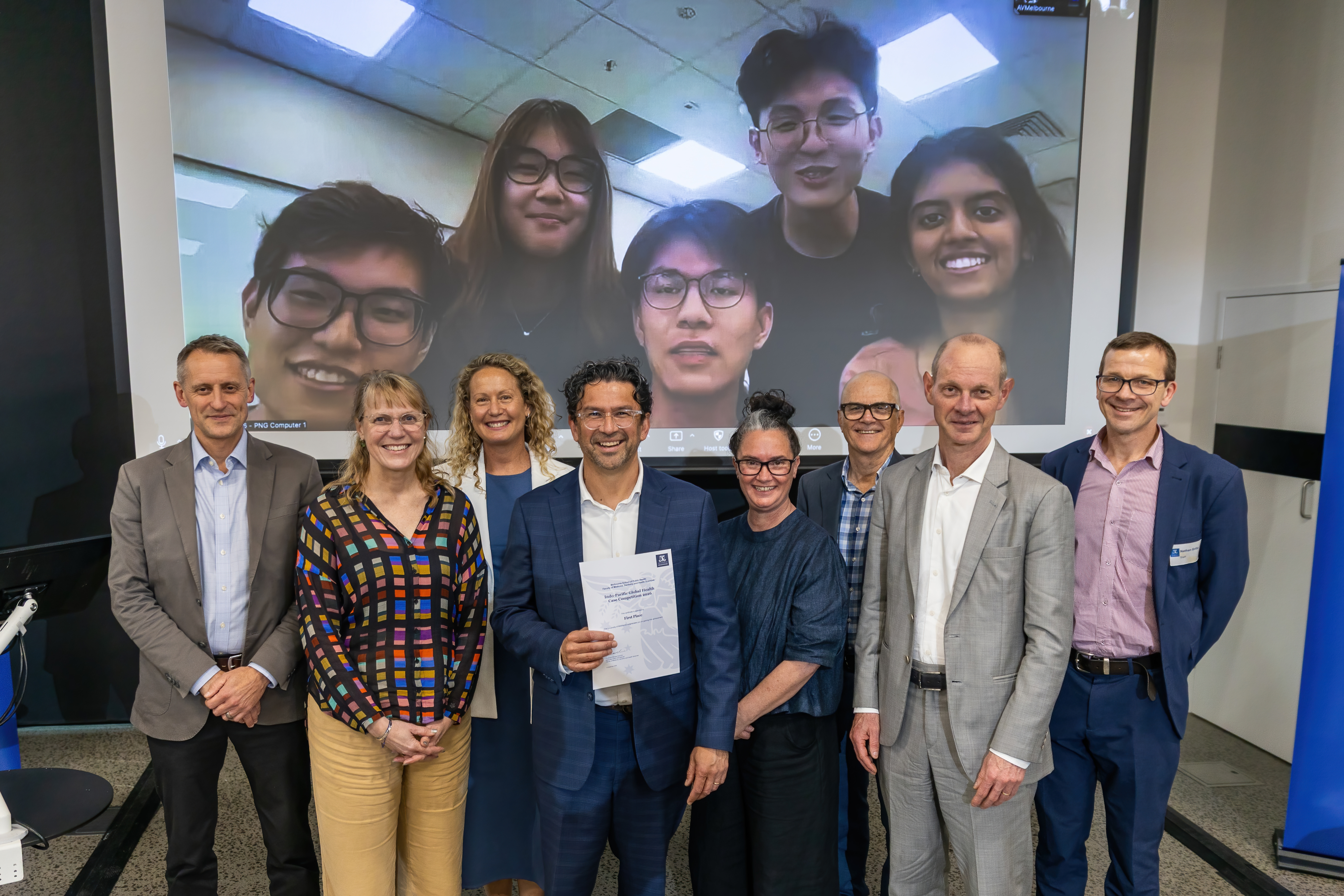
Students from Australia and the Indo-Pacific have developed innovative solutions to one of the region's most pressing health challenges, working across disciplines and borders through the fifth annual Indo-Pacific Global Health Case Competition.
Supported by the Faculty of Medicine, Dentistry and Health Sciences (MDHS) and the Melbourne School of Population and Global Health, the competition brought together 30 multidisciplinary teams from 13 universities across eight countries, including Australia, India, Vietnam, Indonesia, Malaysia, Singapore, Thailand and Laos.
Nanyang Technological University (Singapore) took first place overall, with the University of Melbourne finishing second and two Universitas Gadjah Mada (Indonesia) teams placing third and fourth.
The second-place University of Melbourne team developed a proposal called Our Health that combined community education, health screening, telehealth services and a mobile app to improve prevention and continuity of care for people at risk of diabetes-related kidney disease in Vanuatu.
The competition challenged students to develop an evidence-based, four-year A$12 million program to address diabetes-related kidney disease in one of five Pacific countries: Tonga, Fiji, Vanuatu, Papua New Guinea or the Solomon Islands.
Students were required to balance long-term prevention strategies with immediate healthcare needs while considering each country's geographic, economic and cultural context.
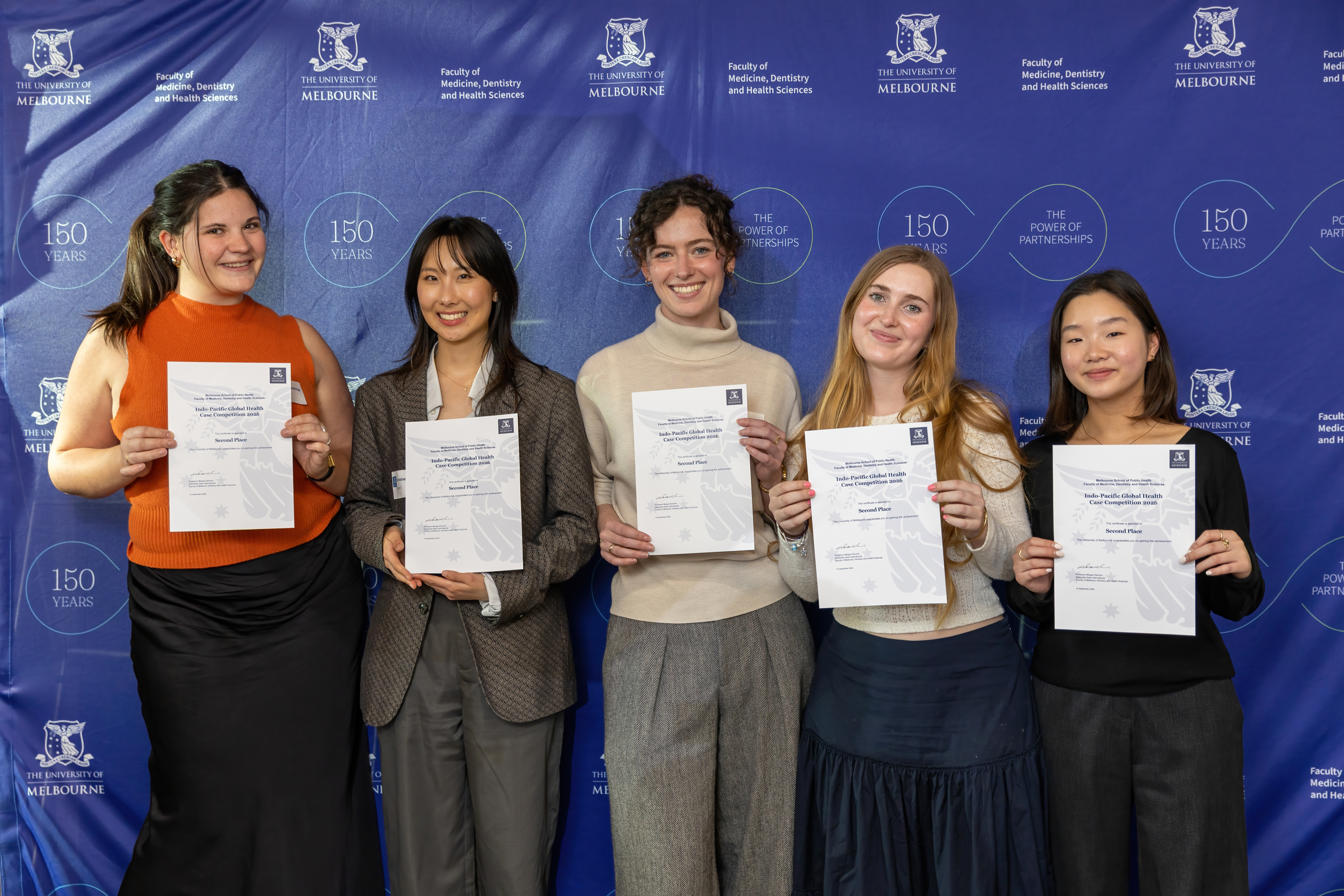
Second-placed team of students from the University of Melbourne. L-R: Amelie Dowling, Christine Lu, Alice Clifford, Florence Buck, and Allie Na. Picture: Cesar Nicholas
From the University of Melbourne, 84 undergraduate and postgraduate students from five faculties participated, including Medicine, Dentistry and Health Sciences, Science, Arts, Business and Economics, and Engineering and Information Technology.
MDHS Interim Dean Professor Mike McGuckin said the competition allowed students to work through issues that cannot be addressed from a single disciplinary perspective.
“This competition reflects the kind of complex, real-world challenges our students will encounter as health professionals and global citizens. Bringing students together across disciplines and countries gives them an opportunity to grapple with that complexity while learning from each other,” Professor McGuckin said.
Doctor of Medicine student Alice Clifford, a member of the second-placed University of Melbourne team, said the experience encouraged her to think beyond the health system she knew.
“We were challenged to think differently about what a health solution could look like. You can’t simply build the healthcare system we have in Australia in Vanuatu. You really have to understand the country, think about what people need and how they might respond to an intervention," Alice said.
"I think one of the biggest things I took away was that everyone has something they can contribute, no matter what their background is. You’re working through a complicated problem together, and everyone is learning from each other."
Deputy Vice-Chancellor (Global, Culture and Engagement) Professor Michael Wesley said opportunities for students to build connections with peers in the region are an important part of providing students with a global mindset and the competence and confidence to operate in diverse cultural contexts.
“The Indo-Pacific Global Health Case Competition gives students from across our region the opportunity to work together on health challenges that have real consequences for communities and health systems,” Professor Wesley said.
“The ideas developed through the competition are important, but so are the relationships that emerge from it. By connecting future leaders from across the Indo-Pacific, we are helping build the networks, understanding and trust that will strengthen regional collaboration for years to come.”
Director of the Victorian State Office at the Department of Foreign Affairs and Trade, Paul Stephens, said regional expertise needs to be part of how health challenges are approached.
“The best solutions are developed with the region, drawing on the region’s knowledge, leadership and diversity. The relationships and habits of collaboration students build through this competition can have an impact well beyond the competition itself, strengthening how our region responds to future health challenges,” Mr Stephens said.
As the first place and regional winner, the Nanyang Technological University team will be invited to the Emory Morningside Global Health Case Competition in the United States next year, alongside six University of Melbourne students selected from this year’s participants.