University of Melbourne acquires next-generation mass spectrometer with potential to transform biomedical research
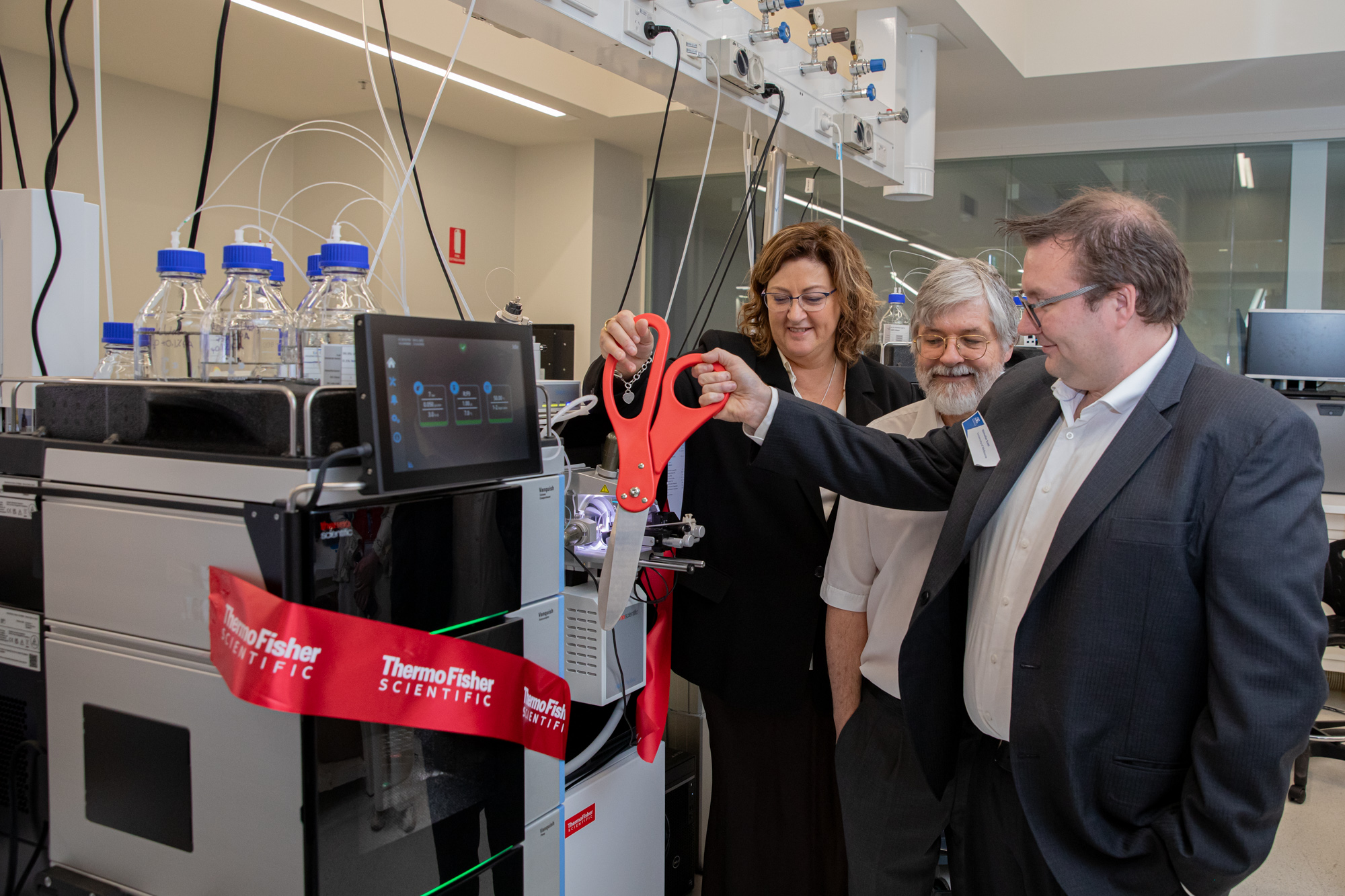
The University of Melbourne has officially launched the installation of the Southern Hemisphere's first Orbitrap Astral Zoom mass spectrometer at the Bio21 Institute, marking a significant leap forward in research capabilities across the biological, environmental and medical sciences.
The new instrument has the potential to improve disease diagnosis, aid in the development of more effective treatments, and contribute to our understanding of fundamental biological processes that affect human health and the environment.
Professor Ivan Marusic, Pro Vice-chancellor (Research Infrastructure) at the University of Melbourne, highlighted the instrument's potential impact on biomedical research.
"This technology will revolutionise our approach to studying disease states. By enabling the analysis of small sample types, including patient biopsies and cells isolated from blood samples, we can now explore conditions that were previously challenging to study at the molecular level.”
“This has enormous implications for improving diagnosis and treatment of various diseases, from rare metabolic disorders to more common conditions such as influenza infections."
Developed by Thermo Fisher Scientific, the Orbitrap Astral Zoom represents the latest generation of high-end mass spectrometry technology. It offers data collection rates ten times faster than previous generations and provides near single-molecule level sensitivity, enabling researchers to undertake experiments faster and extract richer information from biological samples.
Its acquisition was made possible by funding from an Australian Research Council (ARC) Linkage Infrastructure, Equipment and Facilities (LIEF) grant co-led by teams from across the University of Melbourne and La Trobe University.
The Orbitrap Astral Zoom will benefit a wide range of research fields, including environmental microbiology, exercise physiology, and oceanography. It will enable more detailed studies of how pathogenic bacteria survive in the environment, how muscle cells respond to exercise, and how bacteria within the ocean recycle sulfur from biological molecules.
Professor Matt Watt, Associate Dean of Research, Faculty of Medicine, Dentistry and Health Sciences, said: "This instrument is a game-changer for our research community. Its unprecedented speed and sensitivity will allow us to delve deeper into complex biological systems, opening new avenues for understanding and treating diseases.”
“Having the first of such instruments in the Southern Hemisphere positions the Melbourne Biomedical Precinct at the forefront of global research, enhancing our collective ability to collaborate on innovative structural biology and biopharmaceutical applications with industry and top research groups worldwide.”
The Orbitrap Astral Zoom will be housed in the Bio21 Mass Spectrometry and Proteomics Facility, an open-access research hub serving over 300 users from more than 70 research laboratories across institutions including the University of Melbourne, La Trobe University, Monash University, RMIT, Swinburne University, James Cook University, Murdoch Children's Research Institute, Walter and Eliza Hall Institute of Medical Research (WEHI), Peter MacCallum Cancer Centre, and CSIRO.
Jo Broughton, Vice President & General Manager, Australia & New Zealand at Thermo Fisher Scientific, said: "We are thrilled to partner with the University of Melbourne in bringing this state-of-the-art technology to Australia. The Orbitrap Astral Zoom represents our commitment to pushing the boundaries of scientific discovery. Its installation at Bio21 will accelerate research and innovation across multiple disciplines, ultimately contributing to improved health outcomes and scientific understanding."
The acquisition of the Orbitrap Astral Zoom is part of a broader partnership between the University of Melbourne and Thermo Fisher Scientific, formalised earlier this year with a Memorandum of Understanding (MoU) and the launch of the Applications, Service and Knowledge (A.S.K.) Centre.