New Fellows elected to the Australian Academy of Technological Sciences and Engineering
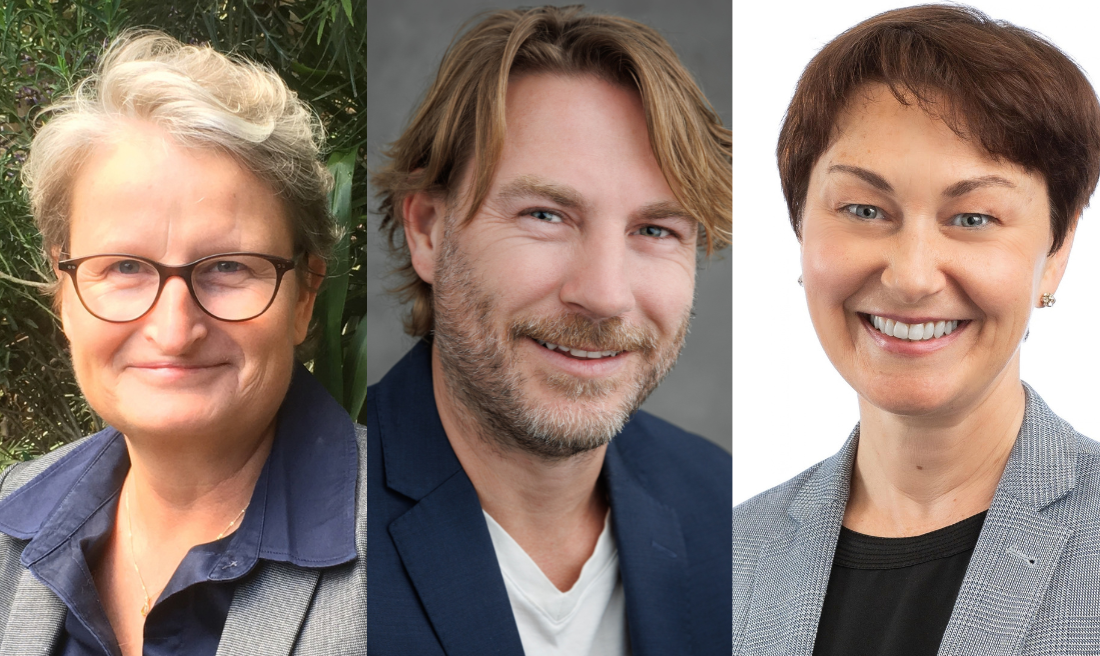
Three University of Melbourne scholars are among the 34 new Fellows elected to the Australian Academy of Technological Sciences and Engineering in 2026.
The Fellows are elected for excellence in the fields of applied science and engineering, and for making outstanding contributions to research, commercialisation, leadership and policymaking.
- Professor Amanda Ellis is a leading applied chemist and nanotechnology researcher in the Faculty of Engineering and Information Technology. She is internationally recognised for her work in surface and interface science, with diverse applications spanning energy harvesting and storage, DNA nanotechnologies and sustainable building materials. Her patented inventions include turbostatic carbon films, transparent electrodes, DNA genotyping, antibiofouling membranes and nanoscale device fabrication. Through collaborations with industry, Professor Ellis has translated surface science into practical technologies including Australian banknotes, desalination membranes and lithium-ion battery anodes.
- Professor Nicholas Opie is a pioneering and multi-award-winning biomedical engineer and an Honorary Professorial Fellow in the Faculty of Medicine, Dentistry and Health Sciences. He has played a leading role in the development and clinical translation of multiple life-changing inventions, including bionic eyes, brain-computer interfaces and deep-brain stimulation systems. Professor Opie is a founder and director of two neurotechnology companies, Synchron and Ultra Bionics, and has mentored and trained more than 85 teams and individuals to develop and grow their own startups. He is a scientific advisor to eight medical technology companies.
- Laureate Professor Kate Smith-Miles is Pro Vice-Chancellor (Research Capability) and a Melbourne Laureate Professor in the School of Mathematics and Statistics, part of the University’s Faculty of Science. Professor Smith-Miles is also Director of the ARC Training Centre in Optimisation Technologies, Integrated Methodologies, and Applications (OPTIMA). She is known for her paradigm-shifting research in applied mathematics. Her Instance Space Analysis methodology provides a mathematically rigorous foundation for stress testing algorithms, solving a long-standing challenge in algorithm performance. It has had a profound impact on research practice and is used internationally by thousands of researchers and industry groups across optimisation, machine learning, AI, scheduling, logistics and many other computational fields.
To view the full list of Fellows, visit the Australian Academy of Technological Sciences and Engineering website.