Professor Marta Garrido receives funding for research into the perceptual experiences of people with psychosis
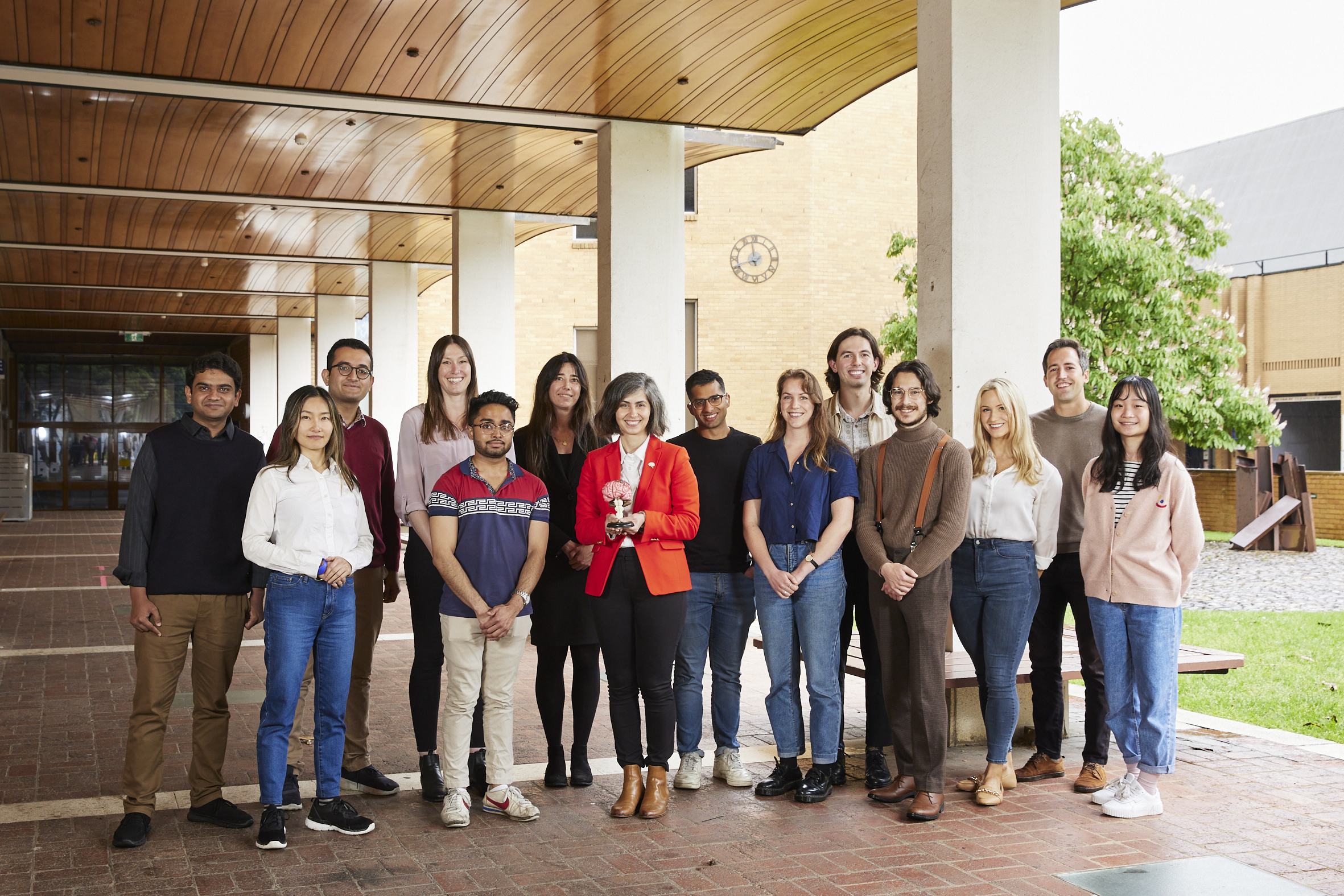
Professor Marta Garrido, Melbourne School of Psychological Sciences, has been awarded $1.3 million funding from the Tiny Blue Dot Foundation to study the perceptions of people with psychosis in the hope it could lead to new treatments.
The grant was awarded for the proposed study titled A Computational Psychiatry Approach to Understanding the Brain Mechanism Underpinning Altered Perception in Psychosis. The team, led by Professor Garrido, includes Professor Suresh Sundram and Professor Nao Tsuchiya from Monash University. The team also includes Professor Stephen Wood from the School of Psychological Sciences and the Centre for Youth Mental Health, who also leads the Clinical Neuroscience research area at Orygen, the National Centre of Excellence in Youth Mental Health. Their research aims to address contradictory evidence around perceptual experiences, which will be used to better inform therapeutic treatments for patients experiencing psychotic symptoms.
“People with psychosis can have scary experiences such as hallucinations – the experience of seeing or hearing things that no one else does. I want to understand what are the brain mechanisms that lead to these aberrant experiences,” said Professor Garrido.
“My hypothesis is that symptoms are caused by disruptions in sensory information processing. When faced with uncertain information, all of us in the general population integrate sensations (from vision and audition) with our own biases, such as memories and prior beliefs. I expect to find that, for people with psychosis, there is an imbalance in the integration of sensory information and prior beliefs that leads to altered perception,” said Professor Garrido.
“Knowing whether perceptual alterations in psychosis are caused by aberrant beliefs or sensations will inform when therapeutic strategies should focus on cognitive training (to change beliefs), drug interventions (to change sensation), or both. Identifying the fundamental neural mechanisms that cause psychosis will also inform rehabilitation strategies by pointing to brain stimulation and pharmacological targets. Moreover, since I will study groups of patients at different illness stages, I will be able to characterise the neural trajectory of psychosis from at-risk to full-blown schizophrenia. I hope this will provide a means to predict and prevent transition to more severe stages,” said Professor Garrido.
Over the three-year project, the research team will use brain scans and decision-making tasks to determine if people with psychosis have a different balance of prior beliefs and sensory information when forming perceptions.
“I’m very excited to be working with the Tiny Blue Dot Foundation for the first time. The Foundation has a strong focus on supporting impactful neuroscience projects that help individuals and communities to live more fulfilling and joyful lives, and I’m honoured to be part of this vision,” said Professor Garrido.
Professor Garrido leads the Cognitive Neuroscience and Computational Psychiatry Laboratory and is the Director of the Cognitive Neuroscience Hub at the Melbourne School of Psychological Sciences. She is also a Research Program Lead at the Graeme Clark Institute of Biomedical Engineering.