University of Melbourne researcher funded by the Ovarian Cancer Research Foundation
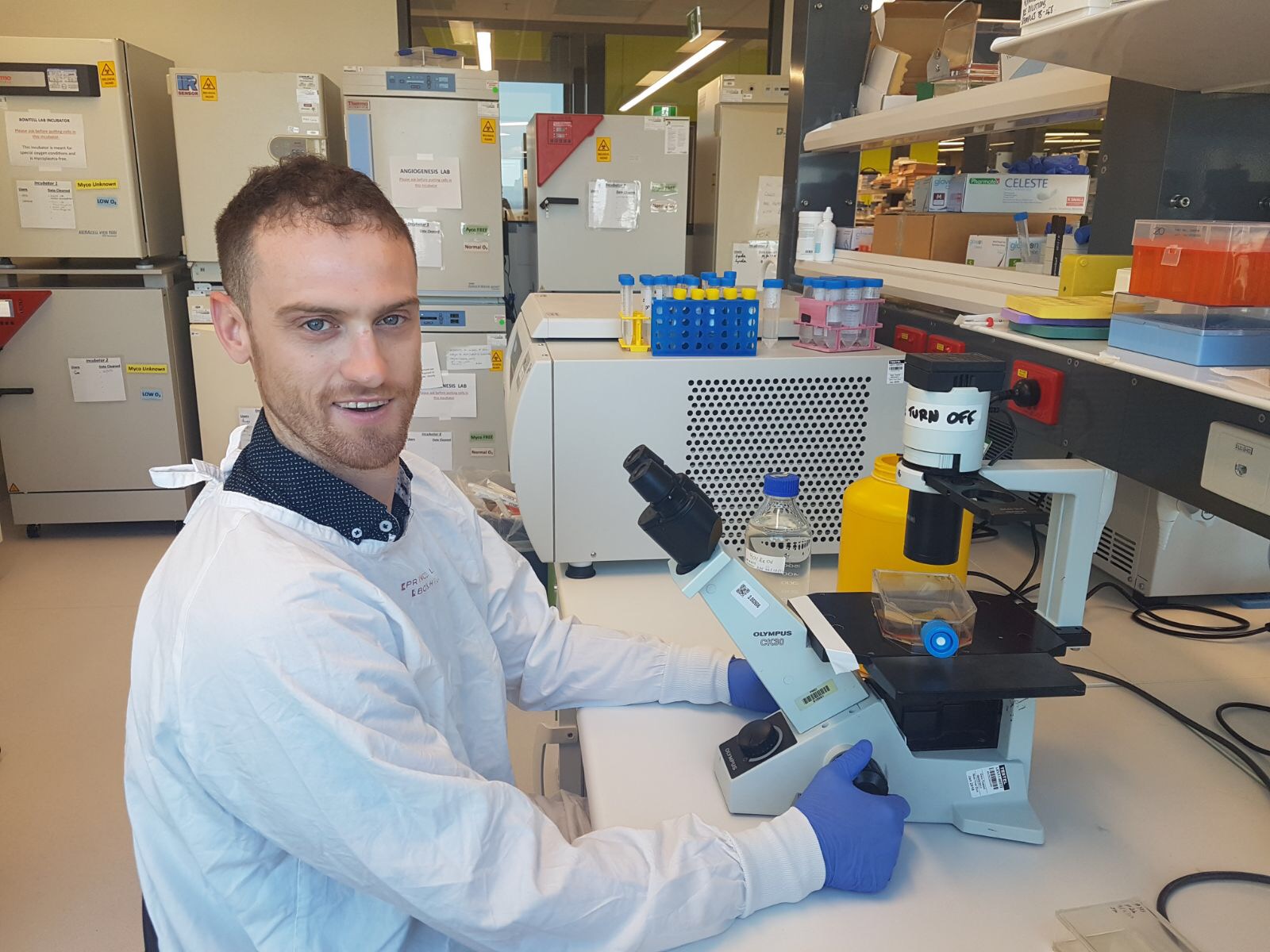
A team team led by University of Melbourne researcher Dr Dane Cheasley at the Peter MacCallum Cancer Centre has been awarded $480,000 by the Ovarian Cancer Research Foundation.
Dr Cheasley and his team seek to determine an effective treatment for one of the rarer types of ovarian cancer — low-grade serous, which frequently diagnosed in younger people and is generally unresponsive to treatments including chemotherapy.
While the cancer recurs in 70 per cent of patients, available treatments only give five per cent of patients more time.
Using powerful high throughput technology to scan thousands of drugs, Dr Cheasley has identified twenty existing drugs that are likely to be able to target the unique characteristics of low-grade serous ovarian cancer. The team aim to determine which drug combination is most effective and has the least toxic side effects for patients.
All of the drugs being tested have already been approved by the Therapeutic Goods Administration for use in other cancers, and they are off-patent. This will mean that, upon successful clinical trials, it is highly likely the most promising drug combination will be able to be fast-tracked to the clinic and be more affordable.
Reflecting on his commitment to finding a solution to one of the rarer forms of ovarian cancer, Dr Cheasley said, “I’m excited about the prospect of our team taking what’s happening in the lab and making a huge difference to patients, for whom a rare disease has meant to date, there’s been very few options.”
This grant is one of three medical research grants totaling $2.1 million awarded to Australian researchers by the Ovarian Cancer Research Foundation to tackle distinct aspects of ovarian cancer. An additional $300,000 will be distributed through co-funding of collaborative research projects for a combined commitment of $2.4 million.