Collaboration driving change in healthcare
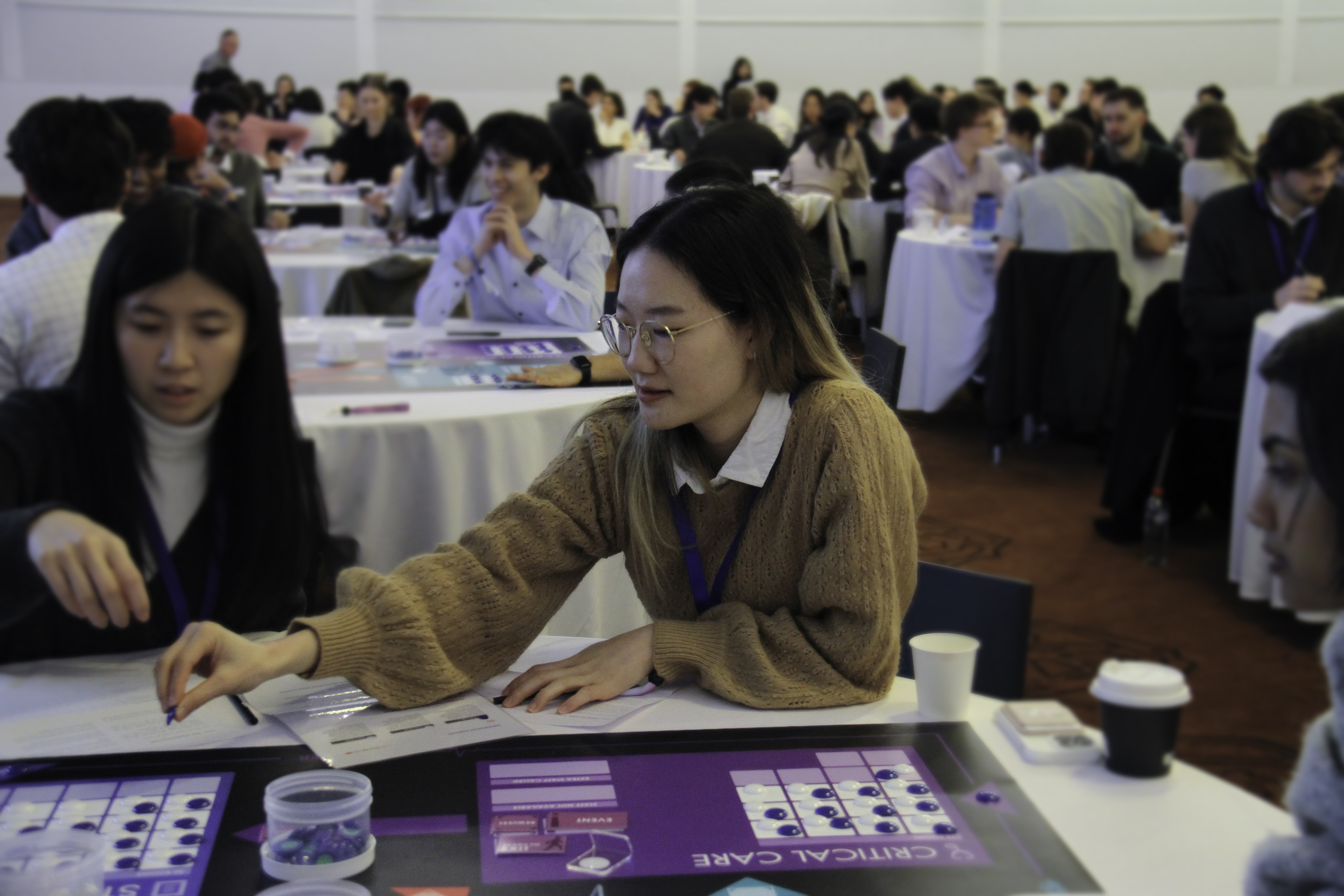
The Collaborative Practice Centre within the Faculty of Medicine, Dentistry and Health Sciences at the University of Melbourne is building a future where health and social care professionals learn to team up before they suit up for professional practice.
Established in late 2023, the CPC is redesigning how collaboration is taught – not just as an afterthought, but as a core skill that’s just as important as individual clinical expertise.
Why this work matters now
The Australian health and social care system, like many around the world, is under increasing strain.
As people live longer, chronic conditions like diabetes, heart disease, and cancer become more common, often requiring care from multiple professionals across different services and locations.
For example, a person living with diabetes may work with a GP to coordinate their care, an optometrist to monitor eye health, a podiatrist for foot screening, a physiotherapist for balance training, a dietician for nutrition support, a pharmacist to manage their medication needs, and a nurse to provide education about the condition. Together, these professionals are expected to collaborate to help keep this person healthy and thriving.
Despite having a system full of brilliant, dedicated people, these professionals have historically been trained in silos. A speech pathologist might know little about a physiotherapist’s scope of practice. A dentist might never interact with a social worker during training. This fragmented education model makes it harder to build the trust and understanding required for effective teamwork in real-world care settings.
“Not being able to communicate with other professionals does have detrimental effects on patient care, so being able to work in an interdisciplinary way is a very good thing that we should all strive for as health professionals,” says Ryan, a student in the Master of Clinical Audiology.
Starting with students
Through the ‘Ways Curriculum’, the CPC is giving students from a wide range of health and social care disciplines, the tools to learn about, from and with each other to be better prepare them for these challenges. They’re starting with students in audiology, dentistry, medicine, nursing, optometry, oral health, physiotherapy, psychology, public health, speech pathology, and social work.
It’s called the Ways Curriculum because there are so many different ways students can collaborate, reflect, and shape their learning.
It goes beyond traditional lectures. Instead, students engage in simulations, interactive games like ‘Friday night at the ER’, and activities based on analogies and teamwork challenges. They experience the friction, fun, and freedom that comes with real collaboration.
“We’re doing things differently,” says Vivienne Mak, lead for education at the CPC. “Students aren’t just coming in to absorb knowledge. They’re actively building teamwork skills and having fun while doing it.”
The curriculum is informed by the CPC’s own research, which draws on leading experts in the science of teamwork. The goal is simple, empower students to become collaborative, confident contributors to the future of health and social care.
Students driving the change
Even before the CPC was established, students within MDHS were already asking for more interprofessional opportunities. That’s why they formed the Interprofessional Education and Practice Health Student Network (IPE-HSN), a student-led initiative aimed at building connections, breaking silos, and learning together socially and professionally.
“I think it’s important because in healthcare, we’re collaborating with so many other disciplines that you wouldn’t even think of,” says Roheena, a public health student. “Collaboration improves the actual care that patients receive.”
The CPC listens to and co-creates with students. Their feedback shapes how activities are designed, what topics are covered, and how the learning is delivered. Earlier this year, the CPC launched a series of short, social media-style videos explaining different healthcare roles. The videos have received over 30,000 views, showing just how eager students are for accessible, collaborative learning.
Learning to lead, not just follow
One of the most powerful outcomes of interprofessional learning is what it builds beneath the surface - trust, psychological safety, and the confidence to speak up.
The CPC actively supports students in developing these team culture skills. Through honest reflection, peer discussion, and facilitator-supported sessions, students explore how to foster inclusive environments so that when they graduate, they can lead collaborative change, not just participate in it.
“Working together to change isn’t necessarily easier,” says Vivienne Mak, “but it is better.”
What’s next for the CPC?
Though still young, the Centre is growing rapidly. Interprofessional experiential workshops are being piloted across the faculty and will soon be embedded into more areas of the curriculum. Plans are underway to incorporate more work-integrated learning that reflects the complexity and interdependence of real-world care.
Just as importantly, the CPC is investing in staff development. A new community of practice for clinical educators has been designed to help academic and clinical staff learn how to co-teach, model collaboration, and facilitate shared learning environments.
The vision isn’t just for students to collaborate; it’s for everyone in the education ecosystem to experience what great teamwork feels like.
The bigger picture
What if collaboration wasn’t an afterthought in health education - but the foundation?
That’s the question the CPC is answering, one workshop, one simulation, one conversation at a time. In doing so, they’re helping to build a new generation of health and social care professionals who don’t just treat symptoms, they connect, communicate, and co-create better care.