Dr Lionel Lam on becoming an education-focused academic
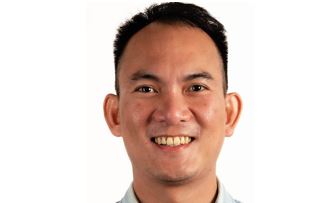
Meet Dr Lionel Lam, a successful educator whose current research revolves around transdisciplinary curriculum design and technology-enhanced learning in engineering education. He shares his thoughts about why he loves his job as an education focused academic, a major obstacle along the way and his passion for teaching.
Tell us about your career path and the key decision-making points along the way.
I've always loved biology, chemistry and physics and I really like how they can be combined in interesting ways to help society. I sort of fell into engineering naturally. After high school, I moved to Perth from Malaysia to do my Bachelor of Engineering in Chemical and Process Engineering at UWA. I liked that it combined chemistry and physics, and there was the possibility of doing some biology as well, including in the pharmaceutical area.
My interest in teaching began quite early. I had already done some informal tutoring of my classmates in high school and then as an undergraduate. It’s been a through-line in my life and really helped solidify my passion for teaching.
So when I finished my undergraduate degree, I decided I wanted to go into academia. I was a bit naive, and I thought that academia meant teaching, teaching, teaching. I wasn’t really aware of the research part and that came back to bite me later in my career.
My chemical engineering degree at UWA was very focused on oil and gas minerals processing, but I prefer to focus more on biology so I decided to apply for further study. But before this, I did a research internship on wastewater treatment in China to try to explore my options as a chemical engineer and see what the boundaries were. I was eventually accepted into Massachusetts Institute of Technology to do a PhD in Chemical Engineering, and I did a Masters in Chemical Engineering Practice alongside it. As part of my masters, I worked for General Mills as a food engineer making granola bars. The other company I worked for was Merck in Singapore, where I worked on steroid production among other things. All this exposure to these different applications of chemical engineering was important for my career later.
I went back to Boston to finish my PhD but I had a very hard time. It was a huge slump for me and I lost a lot of confidence. The lab wasn’t a good fit for me and I found that it was not conducive to my growth. I realised that I was escaping my research responsibilities by spending long nights putting together teaching material instead. But I don't regret that period of my career. It helped me understand that technical research wasn’t my passion and maybe the traditional linear path of teaching and research wasn’t for me.
Where there were any key points where you felt you blossomed in your career?
There was a mentor I had when I was doing my undergraduate degree and he was amazing. He was very passionate and enthusiastic about his teaching and had a great teaching style which I try and emulate now. I would describe it as storytelling in lectures, trying to weave a story throughout the entire subject. We ended up being colleagues here for a while, which was wild.
The other key point would be that, as terrible as it was, COVID and lockdown forced us all to switch to online teaching almost overnight, and this gave me the opportunity to show my value, because I was okay with spending a lot of time learning new technologies and helping my colleagues. It's made me feel like I belonged and I was appreciated, so it's contributed to my growth immensely.
Has teaching met your expectations?
Absolutely. As I've grown in this role, I've focused on engineering education research, and so far it's been okay, probably because it’s quite different to the research I was doing before. I love analysing huge swathes of data. I think it’s because I'm not very experimental, I'm more of a computational guy.
When I came in as a Level A, I didn't have my own subjects and it was more of a support role. Then, as I mentioned before, I really hit my stride during COVID, because I could prove myself by helping a lot of people and showing them what I'm capable of. After that, the opportunities started coming in.
I’m now responsible for the design and delivery of four subjects per year, including one of our introductory engineering subjects. Being Course Coordinator for the biomedical engineering program is a leadership role I wouldn’t have dreamt of when I first started. I'm also on several Learning and Teaching committees, so I'm slowly starting to see how my job fits into the bigger University structure. In terms of levels, I’ve gone from Level A to B, and from a fixed-term to a continuing position. It’s not a big progression, but I’m slowly working upwards.
I wouldn't say I'm particularly ambitious. I feel like the different phases of my career happened by serendipity. For example, in my second year here I was asked to go to Japan for three months to teach. And then just last year, I was invited by the faculty to go on an outreach trip to China for future students, which I loved. It helped me make connections across the university. I'm going on sabbatical leave in Sweden next semester to further my education scholarship. I consider myself pretty lucky because my working life doesn't feel like a job. I just come in and I’m busy doing the things I like to do.
What do you think makes you appreciated as a teacher?
I think my students value the way that I can take a complex concept and break it down into little bits to lay down a good foundation and build it up from there. I think a lot of academics know too much, so when they have to teach, they’ve forgotten what it feels like to know nothing. And I think it's a skill to be able to forget what you already know and build up from the bottom before you reach the top.
How do you think your colleagues see your role and the fact that it’s education-focussed?
The Head of Department and Head of School are obviously very supportive, but I think perhaps my colleagues sometimes feel it isn’t as valid or as solid as a traditional Teaching and Research pathway. I do feel a bit under-appreciated sometimes, but it’s slowly getting better as I prove myself.
Do you see a real future for other education-focused staff coming in?
Yes, I do. I mean the Teaching and Learning lab has already been set up in the faculty. Things like that will help. People are talking about changing the culture more and more in the University, but it will take time.
There are a few education role models in the faculty that I can look up to, but not a lot. I consider myself quite privileged because I'm in a continuing position now. I know others with teaching as a focus are still struggling to find job security and I worry about that.
What would you like people reading this to take away from your story?
Don’t be afraid to fail because it’s part of what shapes your current trajectory and develops your personality. You can use those things to your advantage.
University of Melbourne staff can access more career stories celebrating academic staff on the Staff Hub.