Strengthening AI capability in higher education across Papua New Guinea
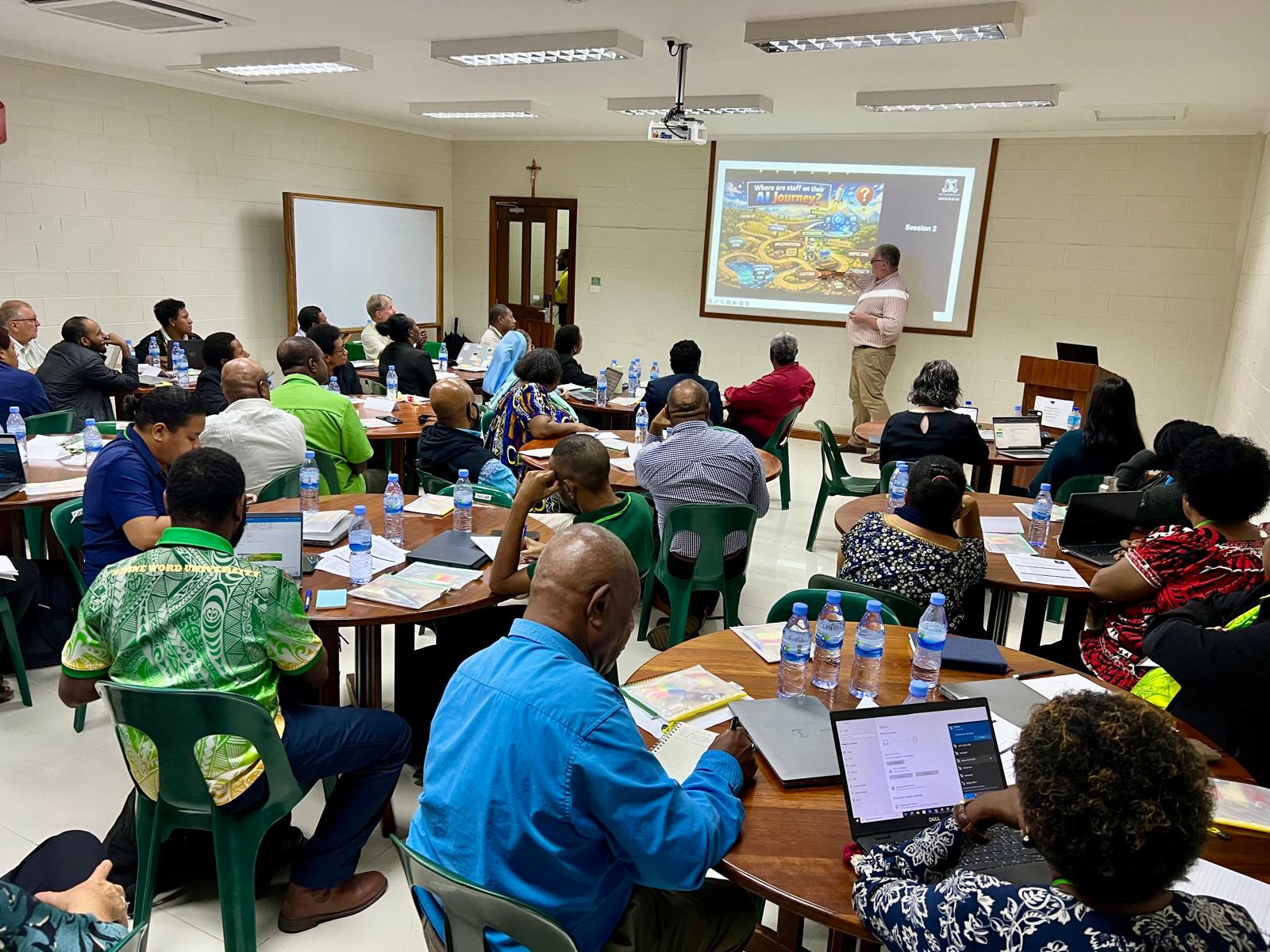
Recently the University of Melbourne visited Divine Word University (DWU) in Madang, Papua New Guinea, to collaborate on strengthening institutional approaches to artificial intelligence (AI) in higher education.
Experts in AI teaching, learning and assessment from the University of Melbourne including Professor Raoul Mulder, Dr Tracii Ryan and Dr Mat Hardy from the Centre for the Study of Higher Education (CSHE) and Dr Leah Schwartz from the Office of the Deputy Vice‑Chancellor (Education) formed the visiting team.
Working closely with DWU colleagues Professor Iwona Kolodziejczyk, Vice President (Academic Affairs), and Mr Picky Airi, Director of the Centre for Learning and Teaching, the team co‑delivered workshops over three days on AI in higher education for DWU leaders.
“University educators everywhere are grappling with the question of how AI changes teaching and learning”, Professor Mulder said. “While the dilemmas are universal, universities in PNG have some added challenges, including working in a resource-constrained environment, with patchy infrastructure and a large population of remote learners.”
The workshops form part of an Australia Awards Higher Education Partnership Project focused on building institutional capacity across Papua New Guinea and the Pacific by sharing best practices for engaging with generative AI in higher education.
The project centres on three priority areas, AI in assessment design, AI policy and governance, and AI literacy. A key objective is the establishment of dedicated working groups across each of these areas.
Across 2026 these groups will lead the development of AI governance and policy frameworks at DWU, with the ambition that these pilot initiatives can serve as a model for universities across Papua New Guinea.
“What stood out was the depth of engagement and generosity of thinking from our colleagues at Divine Word University. The conversations were insightful, focused and closely connected to local priorities, which should make our future work on AI in higher education more meaningful and impactful in the PNG context” said Dr Ryan.
The week long visit was marked by energetic discussion, collaboration, and shared learning, with a strong emphasis on developing thoughtful, locally grounded approaches to AI in higher education.