Helping improve the experience of neurodivergent students with Sarah Timperley
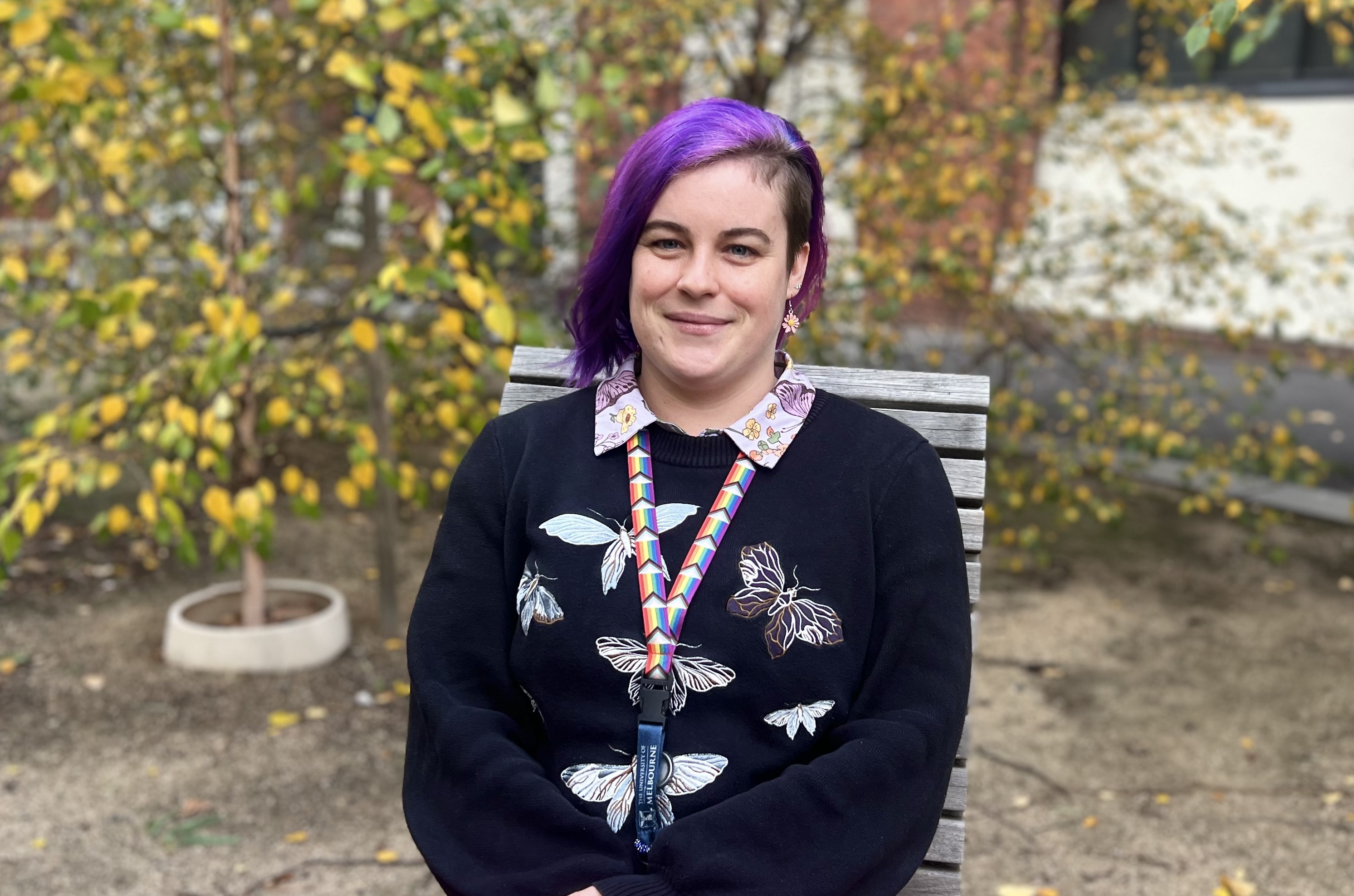
Meet Research Fellow Sarah Timperley, co-lead of the University of Melbourne Neurodiversity Project, which aims to improve the experience of neurodivergent students and staff.
How would you describe your job?
I work on a range of research and education projects that seek to improve the lives of neurodivergent people, especially those at the University of Melbourne. I bring my lived experience of neurodiversity as well as my research background.
I’m based in the Faculty of Education, but the Neurodiversity Project has university-wide work such as workshops, consulting on university initiatives like space design, human resources, and planning.
What kinds of projects does the Neurodiversity Project advise on?
Along with my colleagues in the Neurodiversity Project, Jessica Riordan and Matthew Harrison, we:
- give presentations on neuro-inclusive teaching and learning to educators and student facing teams across the University;
- conduct research, such as recent staff and students needs analyses, which helped inform work across the University including advising the Student Equity and Disability Services team who provide academic adjustment plans and other support to students;
- design and pilot co-design workshops for neurodivergent students to give feedback to lecturers on materials and courses.
We have also given presentations to student leader groups at the halls of residence about supporting neurodivergent students there.
I lead many of the workshops on neurodiversity with my team, and consult on projects. We are all involved in all aspects of the Neurodiversity Project work as it’s only a small team.
How did you get into this line of work?
I originally did research in early childhood education but started branching into evaluation and then neurodiversity research. As a neurodivergent academic, this really drew me in. I found the challenges I had as a neurodivergent person (throughout my journey from student to staff member) within the university environment were shared by a lot of other people, and that made me both feel less alone and want to do something about some of the systemic, social, and attitudinal barriers neurodivergent people often face.
Why is this work important?
Neurodivergent people are often drawn to academia, but the traditional ways people teach, and work are often very constrained and can be barriers to the achievement and wellbeing of neurodivergent students and staff.
It is essential to equip people with knowledge and understanding of how to work with, teach, and design for a range of different needs and ways of processing the world if we want to create a more inclusive teaching and working environment.
What is the main focus of your current work?
I’m currently working with colleagues Jessica Lees in Medical, Dental and Health Sciences and Rima Das in the Faculty of Engineering and Information Technology to design a University Breadth Subject.
We have made this subject as inclusive as possible through curriculum design utilising both the lived experience and subject-matter expertise of our design and teaching team, and made conscious efforts to align with Universal Design for Learning through practices like providing a range of ways to interact with materials and offering different assessment types. For example, written or oral/recorded, in a group or alone.
This is important because it will give students in any discipline the opportunity to learn more about neurodiversity and think critically about how we design for inclusivity, and gives us a way to test and showcase different ways to teach and assess within core subjects.
What is a simple thing anyone could do to significantly improve the experience of neurodivergent students/colleagues?
Be open and proactive towards feedback and change. Ask what people need to succeed, with the understanding that they may not know and that may be an ongoing conversation.
What will be the future focus of your work?
Something that we’ve found is that, when it comes to looking at 'what works' for teaching, the research focuses heavily on school but less so beyond that.
I hope to keep researching (and then teaching) questions around what works for neurodivergent people at all ages, and how we can shape environments to better fit the needs of all neurotypes.