University of Melbourne students join Far North Queensland communities to strengthen local education
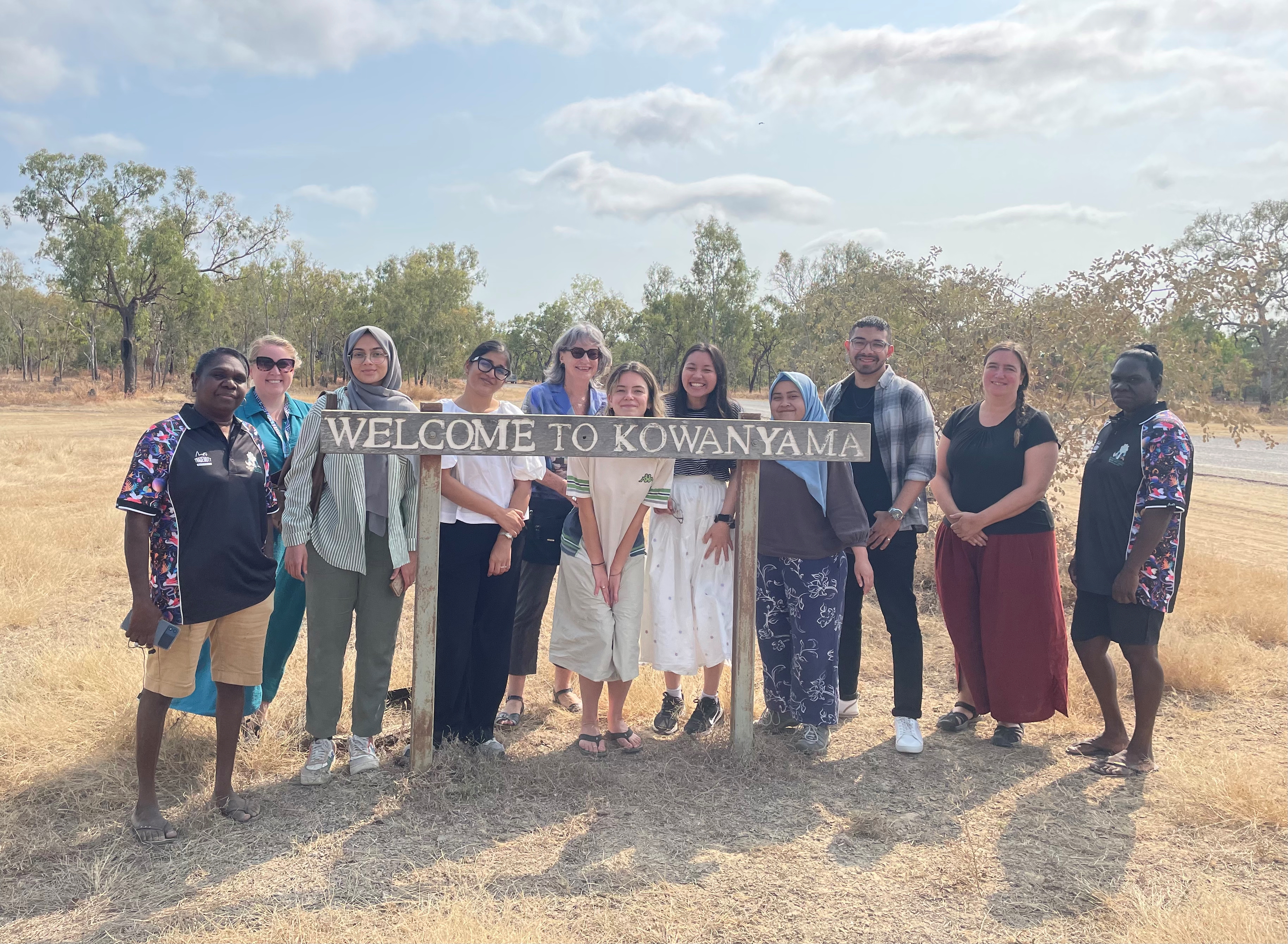
University of Melbourne students helped strengthen local education in Far North Queensland, Australia, as part of the Reach Alliance, a global network of universities that empowers students to address critical challenges in partnership with communities facing barriers to essential services.
Six students, Safana Ahmad, Violet Denham-Blau, Thiri Hlaing, Ashi Khetan, Aisyah Mohammad Sulhanuddin, and Mrishalen Muralidharan, worked with not-for-profit organisation Kindred, led by its Director Maria Rodrigues, to understand how school teachers are supported adjust to working in a very remote community.
In partnership with Youth Empowered Towards Independence (YETI), Kowanyama Aboriginal Shire Council and Kowanyama State School, the team focused their research on the Kowie Card, a community-led orientation program designed to help new teachers connect with local culture and priorities.
After completing cross-cultural research and ethics training, the students travelled to Kowanyama for a week of fieldwork. During their time in the community, they conducted interviews, focus groups, and on-Country learning with teachers, Elders, young people, cultural workers and community leaders.
Their study examined how the Kowie Card equips new teachers with a stronger understanding of local expectations and cultural context to enable deeper connection with the community. Their findings provide valuable insights on how community-led orientation programs can contribute to greater teacher retention and increased student engagement in remote communities.
Pro Vice-Chancellor (International) Professor Adrian Little said the project reflects the University’s commitment to global learning grounded in respectful partnership.
“We are incredibly proud of our students. They worked side by side with community members to build shared understanding and to support the delivery of practical, locally led solutions that strengthen regional systems,” Professor Little said.
“Their work demonstrated how global engagement, grounded in respectful local partnership, can drive meaningful, lasting change.”
Reflecting on this experience, Thiri and Mrishalen said the project reshaped their understanding of community-led work.
“I learned that innovation must be supported by systemic change, cultural understanding and collaboration across sectors,” Thiri said.
“The Kowie Card showed that for an intervention to work, it has to bypass tick-box training and foster genuine, accountability-based relationships,” Mrishalen said.
The students presented their findings at the 2025 Reach Conference, held in Singapore in November, which brought together researchers and community partners from across the international network.
Since joining the network in 2022, the University of Melbourne has provided 34 students to date with opportunities to conduct community-engaged research alongside local and international partners.
Learn more about the case study here.