Five academics inducted to the Australian Research Council’s College of Experts
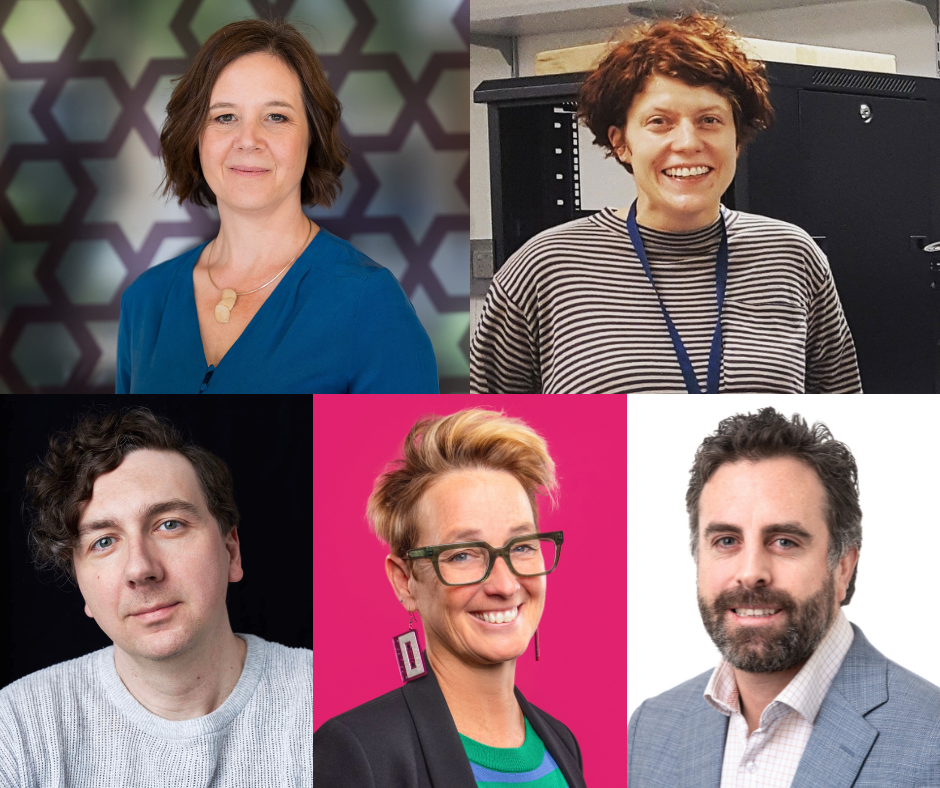
Five University of Melbourne academics have been welcomed as new members to the Australian Research Council (ARC) College of Experts, commencing in 2026.
The ARC College of Experts plays a vital role in supporting research excellence, integrity and innovation across Australia’s research sector. College members are entrusted with the responsibility of evaluating grant proposals, moderating assessments and recommending projects for funding, ensuring that ARC-funded research delivers meaningful outcomes for the Australian community.
The University of Melbourne congratulates the following academics who have been inducted as part of a group of 90 new members into the 2026 cohort:
Professor Cordelia Fine is a Professor in the History & Philosophy of Science Program in the School of Historical & Philosophical Studies, Faculty of Arts.
Her research analyses scientific and popular biological explanations of behavioural sex differences and workplace gender inequalities, and explores how gender-related attitudes and biases influence judgement and decision-making. Professor Fine’s work has made significant contributions to public and academic debates on gender equality and bias in science. Her most recent book, Patriarchy Inc. (2025), was listed by the Financial Times as a notable non-fiction release. She is the recipient of the 2018 Edinburgh Medal, recognising her contributions to understanding gender in science, and was recently named a “living legend” by The Australian.
Associate Professor Elizabeth Hinde is a biophysicist and ARC Future Fellow in the School of Physics. Her research investigates how the architecture of the cell nucleus influences genome function. She combines advanced fluorescence microscopy, spectroscopy and live-cell imaging to reveal how chromatin – the 3D structure that packages our DNA – rearranges in real time to regulate gene expression, DNA replication and repair. Her contributions to biophysics have been recognised internationally, including the US Biophysical Society’s Young Fluorescence Investigator Award and the Australian Society of Biophysics’ McAulay-Hope Prize for Original Biophysics.
Professor Daniel Little is the head of the Knowledge, Information and Learning Lab (Knowlab) and Professor of Psychology within the Melbourne School of Psychological Sciences at the Faculty of Medicine, Dentistry and Health Sciences. His research focuses on understanding complex decision-making, particularly how people integrate multiple sources of evidence and how that knowledge influences how we interpret new information. His current projects include 'Human Scheduling of Perceptual Tasks', which examines the factors that affect how people prioritise tasks that need to be completed in pursuit of their goals, and 'A Statistical Decision Theory of Cognitive Capacity', which aims to synthesise different theoretical measures of capacity limits in attention and memory into a unified computational model.
Professor Katrina McFerran (FFAM) is an international expert on the topic of music, wellbeing and young people based at the Melbourne Conservatorium of Music within the Faculty of Fine Arts and Music. She has undertaken a range of studies investigating healthy and unhealthy uses of music with and by young people, preferring participatory approaches with an emphasis on reflexive, qualitative investigations. Her music therapy research spans school, community and hospital-based practices with young people incorporating a range of music strategies such as song writing, improvisation, performances and music sharing. She is committed to building healthy music cultures in schools that promote wellbeing and connectedness, as well as providing direct therapy services for young people who wish to work towards personal and interpersonal change and growth. In 2021, Professor McFerran was recognised as the top Australian researcher in music and musicology by The Australian newspaper, for the highest number of citations from papers published in the last five years in the top 20 journals in her field. She has published her research in international and interdisciplinary refereed journals and has contributed numerous case studies and practice reflections to edited books, as well as sole authoring the first text on Adolescents, Music and Music Therapy in 2010 (Jessica Kingsley Publishers). She is an active Editorial Board Member of the Australian, American and Nordic Journals of Music Therapy, as well as Music Therapy Today.
Professor Dan Woodman is the TR Ashworth Professor of Sociology in the School of Social and Political Sciences. An internationally recognised expert in the sociology of youth, young adulthood and generations, his research examines how social and economic change shapes young people’s lives, work, and transitions into adulthood. Professor Woodman is the immediate past President of the Council for the Humanities, Arts and Social Sciences and serves on the Executive Committee of the International Sociological Association. He is co-Editor-in-Chief of the Journal of Youth Studies and founder of Australia’s Social Sciences Week. His current research includes leading the long-running Life-Patterns Project, a 30-year longitudinal study funded by the Australian Research Council.
More information about the Australian Government’s Australian Research Council is available here.