New Australian Academy of Science Fellows elected
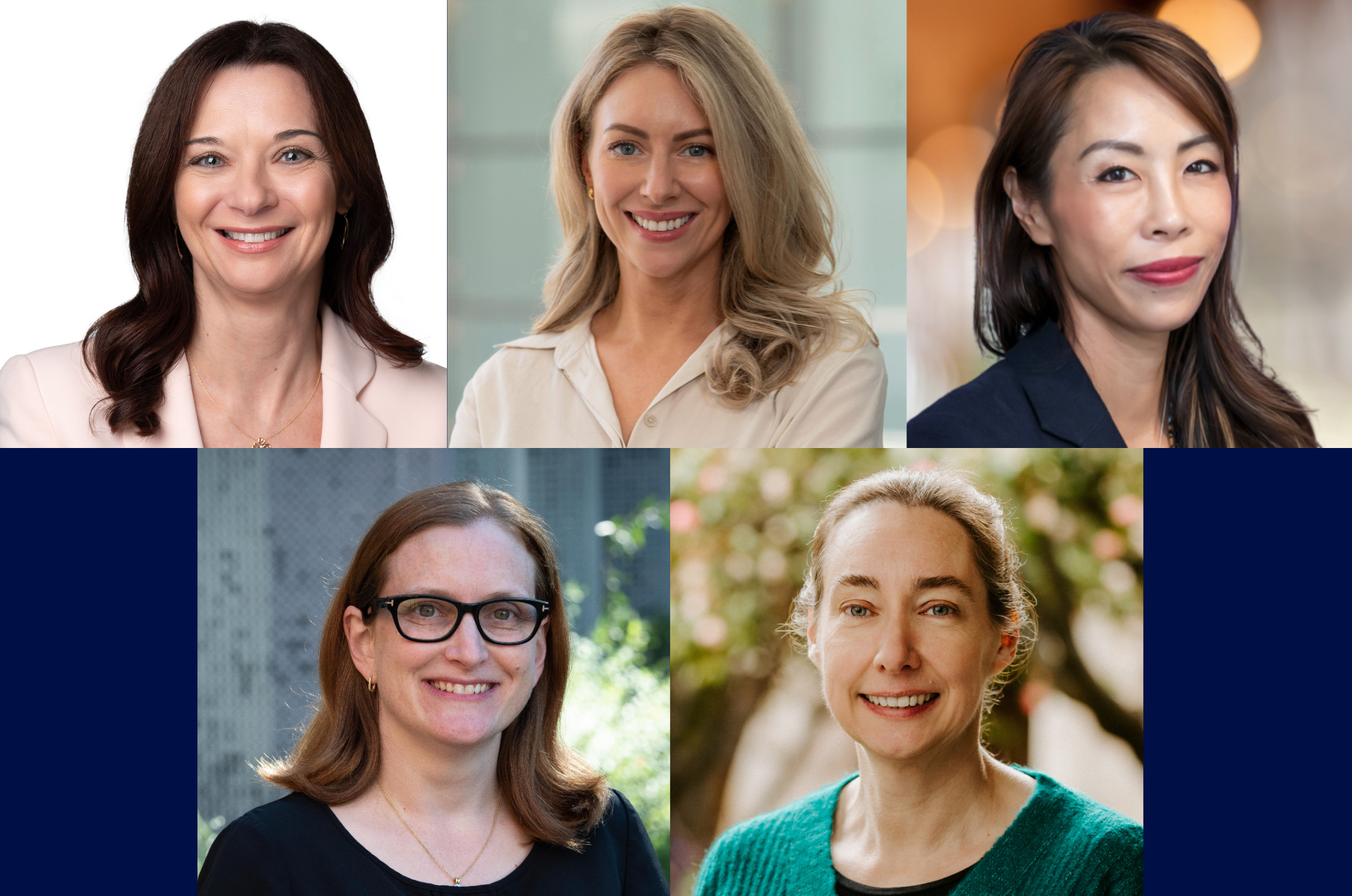
Leading researchers in their field Professor Nicole Bell, Professor Jennifer Flegg, Professor Katherine Kedzierska, Professor Sherene Loi and Professor Laura Mackay have been elected as new Fellows of the Australian Academy of Science (AAS), in recognition of their outstanding scientific achievements.
Being elected as a Fellow is one of the highest honours in Australian science.
Professor Katherine Kedzierska, Head of the Human T cell Laboratory in the Department of Microbiology and Immunology at the Doherty Institute, is a global expert in human T cell immunity. Her research has advanced understanding of immune responses to infectious diseases, including influenza and COVID-19, helping to inform vaccine development and pandemic preparedness strategies.
Professor Kedzierska holds concurrent appointment as Deputy Head of the Department of Microbiology and Immunology, Chair of the Departmental Graduate Research Committee, and Visiting Professor at Hokkaido University in Japan. She is an NHMRC Investigator Fellow, Dame Kate Campbell Fellow and Fellow of the Australian Academy of Health and Medical Sciences.
Professor Laura Mackay, Laboratory Head and Immunology Theme Leader at the Doherty Institute and Sir Gustav Nossal Professor of Immunology at WEHI, is a world-leading researcher in tissue-resident immune cells. Her research has transformed understanding of how immune memory functions within tissues and how these cells protect against infection and disease.
Professor Mackay holds multiple prestigious fellowships and awards. She is a Howard Hughes Medical Institute and Bill & Melinda Gates International Scholar, a Dame Kate Campbell Fellow, a Sylvia & Charles Viertel Charitable Foundation Senior Medical Research Fellow and a National Health and Medical Research Council (NHMRC) Leadership Fellow. In 2022, she became the youngest ever Fellow elected to the Australian Academy of Health and Medical Sciences.
Professor Sherene Loi is a world-leading breast cancer immuno-oncologist whose work has transformed how breast cancer is diagnosed around the world. As an Honorary Conjoint Professorial Fellow within the Faculty of Medicine, Dentistry and Health Sciences and a medical oncologist at the Peter MacCallum Cancer Centre, she uncovered the role of resident T cells in the healthy and cancerous breast, transforming our understanding of local tumour surveillance.
Professor Loi has established standardised assays for tumour-infiltrating lymphocytes measurement for breast cancers, now incorporated into national and international pathology guidelines and clinical trial stratification. Her leadership of global clinical trials has delivered new strategies for breast cancer treatment into routine clinical care, improving survival for patients worldwide with the implementation of checkpoint and other targeted inhibitors.
Professor Jennifer Flegg, from the School of Mathematics and Statistics in the Faculty of Science, brings mathematical rigour to important applied questions in biology and global health challenges. Her expertise in applied mathematics and advanced computational statistics has advanced critical areas of the biological and medical sciences.
Professor Flegg has made substantial contributions to applied mathematics in the areas of infectious disease epidemiology – especially malaria – and partial differential equation models of tissue dynamics, including wound healing and tumour growth. Her research in and service to applied mathematics have been recognised with multiple awards.
Professor Nicole Bell, from the School of Physics in the University’s Faculty of Science, has made outstanding contributions to dark matter and neutrino physics, significantly advancing our understanding of the fundamental constituents of the universe.
Professor Bell has used astrophysics and cosmology to place stringent constraints on neutrino properties and has developed self-consistent descriptions of dark matter interactions. She also demonstrated that neutron stars can act as powerful dark matter probes. She has served as President of the Australian Institute of Physics and has demonstrated a strong commitment to diversity in STEM.
Established more than 70 years ago, the Australian Academy of Science’s Fellowship is made up of more than 600 of the nation's top scientists who live and work in Australia and around the world. The Academy provides independent, authoritative and influential scientific advice, promotes international scientific engagement, builds public awareness and understanding of science, and champions, celebrates and supports excellence in Australian science.