Students win global urban design competition
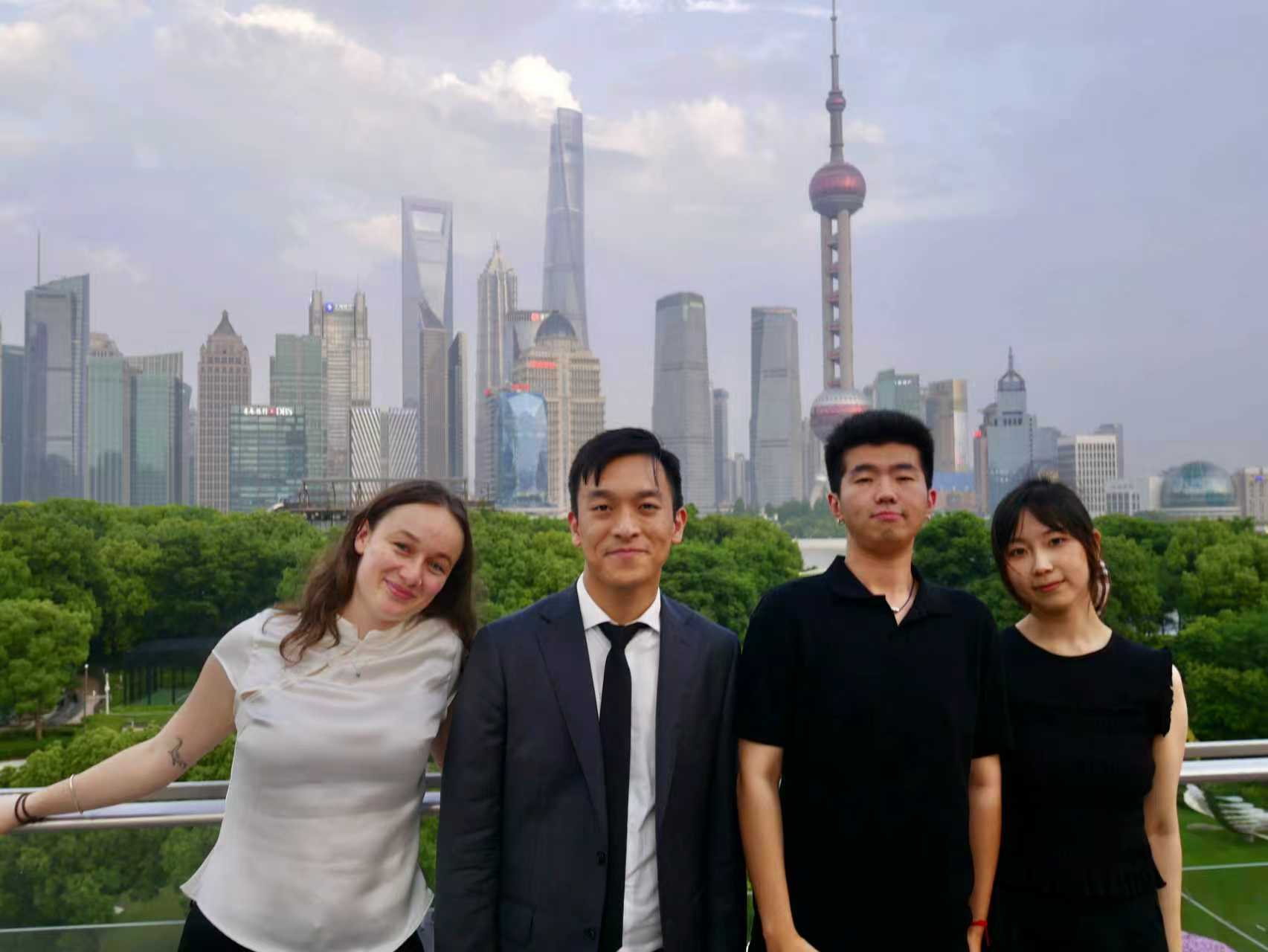
A team from the University of Melbourne’s School of Design has won the 2026 Urban Land Institute (ULI) Hines Student Competition Asia Pacific, taking top honours for a proposal to transform a complex waterfront site beneath Shanghai’s Nanpu Bridge into a resilient, nature-integrated urban district.
The competition brought together 34 teams from 17 universities across 10 countries. The University of Melbourne team’s winning concept, Living in Landscape, reimagines the infrastructure-dominated site as a cohesive urban ecosystem that integrates ecology with public life and urban development.
The multidisciplinary team of three urban design students and a property student travelled to Shanghai to accept their award. Led by Mia Woodfall, Khoa Le, Lihong Sun and Jinghan Yang developed the project through an industry studio (led by Michael Powell) with guidance from Dr David Mah and Associate Professor Julie Miao.
The proposal featured an urban forest, restored river ecologies and activated civic spaces, reconnecting the city to the Huangpu River through climate-responsive, high-density design.
Dr David Mah said the win highlights the value of cross-disciplinary, industry-engaged teaching. “The team demonstrated exceptional creativity while responding to real-world development constraints.”
Mia Woodfall said the experience reinforced the importance of collaboration. “It challenged us to think holistically about how design can contribute to climate-resilient urban futures.”
The competition, organised by ULI Asia Pacific and global real estate investment manager Hines, concluded at the ULI Asia Pacific Summit in Shanghai on 27 May . This year’s challenge focused on a 30-hectare site along the Huangpu River beneath the Nanpu Bridge—one of Shanghai’s most strategically important yet underutilised areas—requiring proposals that balance design quality, financial feasibility, resilience and social impact.
The jury panel included eight industry leaders from development, investment, planning and design, with submissions evaluated on design innovation, financial and market feasibility, sustainability and resilience, and overall development vision.