University researchers honoured by the Australian Academy of Sciences
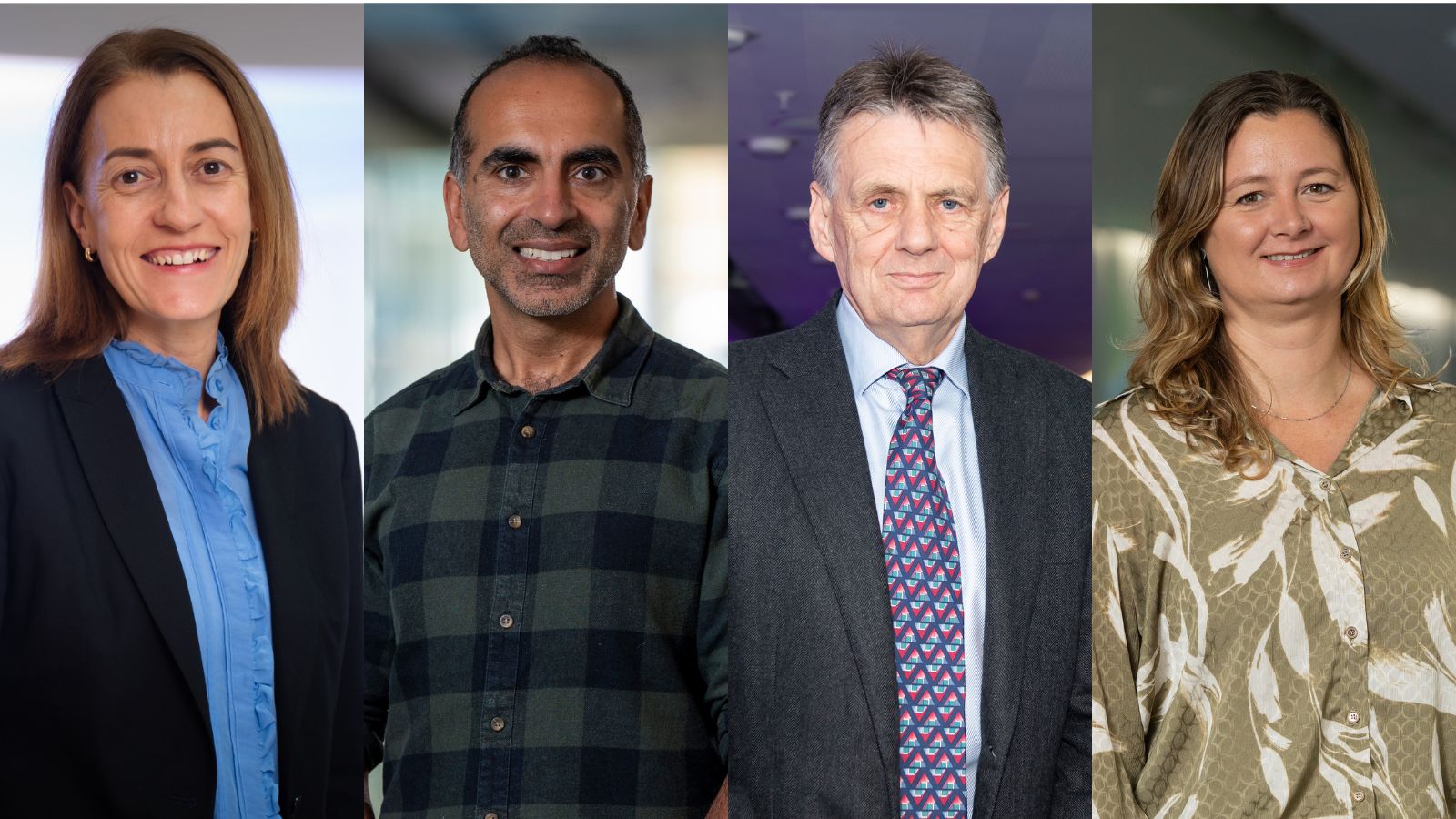
University of Melbourne researchers Professor Sarah Jane-Dawson, Professor Sant-Rayn Pasricha, Professor Alan Cowman and Dr Belinda Phipson have received honorific awards from the Australian Academy of Science (AAS), recognising their outstanding contributions to science.
Professor Dawson, an oncologist at the Peter MacCallum Cancer Centre, has been awarded the Nancy Millis Medal for her research demonstrating how circulating tumour DNA (ctDNA) shed by cancer into a patient’s bloodstream can be used in clinical settings. Dawson’s work has contributed to the use of personalised biomarkers to aid cancer treatment.
Professor Cowman, a laboratory head at WEHI, has been awarded the Macfarlane Burnet Medal and Lecture for his research into understanding malaria and how to treat it.
He has pioneered discoveries that enabled the first genetic modification of the malaria parasite, P. falciparum, creating a basic tool to investigate malaria biology. He has designed new vaccine strategies and with Merck Sharpe and Dohme, led the team that created new antimalarials including MK-7602, now in Phase 2 clinical trials.
Professor Pasricha, a scientist at WEHI and the Head of the Melbourne School of Population and Global Health, has been awarded the Gustav Nossal Medal for his work to reduce the burden of anaemia in mothers and children in low-income countries.
He has led three large trials in Malawi and Bangladesh to treat anaemia in pregnancy, showing that intravenous iron is superior to tablets in women in the third trimester of pregnancy. His work directly informed the 2024 global guidelines for diagnosis of anaemia.
Dr Phipson, also a scientist at WEHI, has been awarded the Christopher Heyde Medal for her work in bioinformatics. Dr Phipson translates statistical ideas into robust, user-friendly software that is now embedded in standard analysis pipelines in RNA- sequencing, methylation arrays and single-cell and spatial transcriptomics technologies. These tools help to understand cancer, kidney disease and heart development and stem cell biology.