$500k University of Melbourne Genesis Pre-Seed Fund investment for AI tool to accurately dose chemotherapy
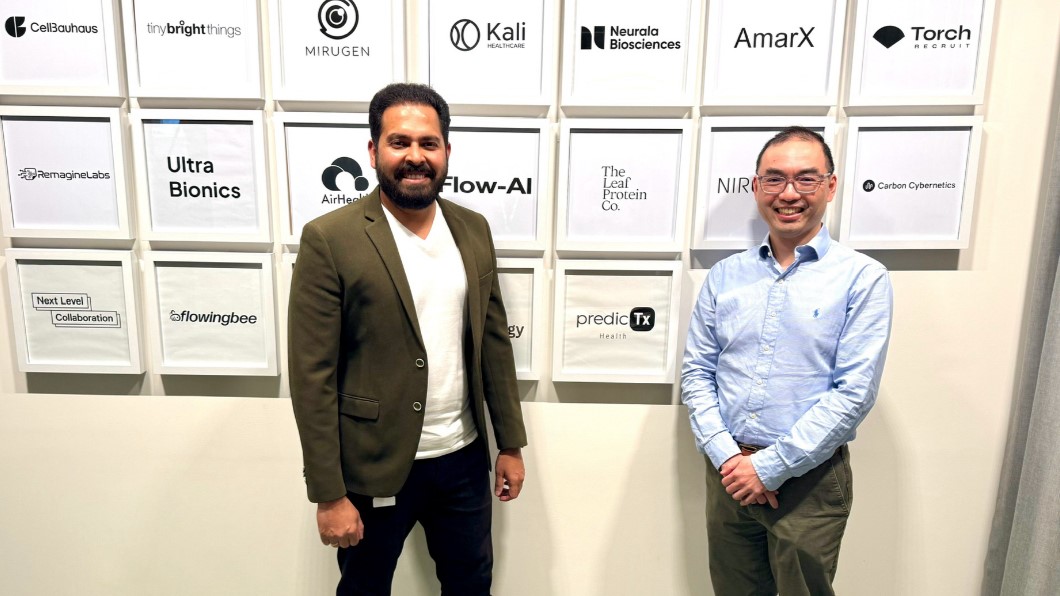
An artificial intelligence tool designed to ensure cancer patients receive more precise chemotherapy doses, has secured $500,000 in funding from the University of Melbourne Genesis Pre-Seed Fund (The Fund).
Developed by researchers from the University of Melbourne and Western Health, the startup called 'PredicTx Health', uses artificial intelligence (AI) to tailor chemotherapy doses to each patient.
Chemotherapy is usually dosed by calculating a patient’s body surface area using their height and weight. However, researchers say this method does not factor in body composition.
The new AI algorithm uses image recognition technology and machine learning to correctly predict the exact amount of chemotherapy a patient requires, based on their body make-up.
The research team, led by Professor Justin Yeung, has received a $500,000 investment from The Fund, which supports University-affiliated startup companies with financial backing, expertise, networks and mentoring.
This new $15 million investment fund plays a critical role in supporting University researchers to take more risks, to be more creative and to accelerate the translation of their research by entrepreneurial means.
The Fund is co-funded by University of Melbourne and Breakthrough Victoria, an independent company managing the Victorian Government’s $2 billion Breakthrough Victoria Fund.
Professor Yeung, Head of the Department of Surgery, Chair of Surgery – Western Precinct at the University of Melbourne and Consultant Colorectal Surgeon at Western Health, said: “Currently, around 60 per cent of colorectal cancer patients who undergo chemotherapy are either overdosed or underdosed. This can cause a range of side-effects, including most severely, immunosuppression, heart attacks and chest infections,”
His team has used CT scan data from more than 500 colorectal cancer patients at Western Health, to train and test the AI algorithm. It found that patients’ body composition (percentages of fat and muscle) determined how the chemotherapy drug was metabolised and stored in their bodies.
The tool can now calculate tailored chemotherapy doses for patients using this information.
"Our algorithm was able to produce accurate chemotherapy dosing for 84 per cent of those 500 patients, which is a significant improvement over current methods of dosing. It doesn’t make sense for two patients with significantly different fat and muscle ratios to be given the same chemotherapy dose, just because they have similar body surface areas," continued Professor Yeung.
"This investment will help to further develop the AI algorithm and assist in the development of a clinical app, which will allow streamlined management of chemotherapy for our patients. It will also enable us to recruit a regulatory consultant as we move towards regulatory approval.”
The announcement follows a recently secured grant of $499,760 from Australia’s Economic Accelerator program, which funded an observational trial as well as technology to integrate the solution into future health systems.
PredicTx has also received support from the Knowledge and Technology Transfer (KT&T) team, Proof of Concept (POC) Fund and Translating Research at Melbourne (TRAM) program — demonstrating the University’s end-to-end support for research commercialisation.
The final step in their journey will be a prospective randomised clinical trial run at several health services including Western Health, to compare this technology with current chemotherapy dosing methodology.