2025 INCITE Program Grant from the US Department of Energy
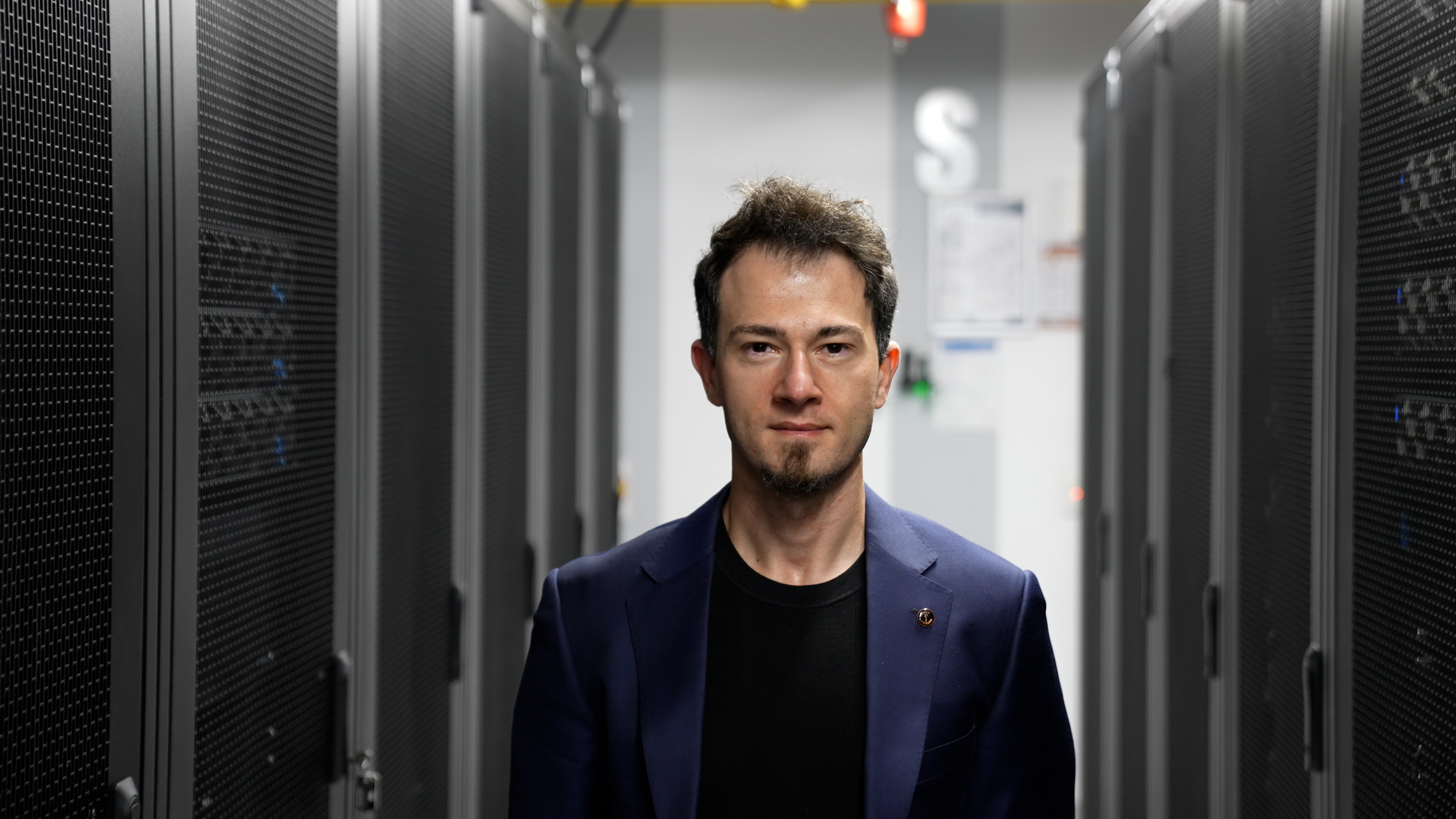
A high-performance computing team led by Faculty of Engineering and Information Technology Associate Professor Giuseppe Barca has been awarded a 2025 INCITE Program Grant by the US Department of Energy.
The project seeks to revolutionise molecular dynamics and drug discovery. The team will draw on quantum and AI technology at the molecular level to provide the research community with a powerful tool for quantum drug discovery that will economically fast-track the development of new drugs and find new treatments for difficult-to-treat diseases, such as cancer.
The INCITE Program is the world’s largest computational grant program. This grant will provide access for three years to the exascale computer Frontier, the second fastest supercomputer in the world, located at Oak Ridge National Laboratory, Tennessee.
The first year of funding, valued at approximately $7.8m, will provide the team with 380,000 ‘node-hours’ on Frontier in 2024, with similar allocations expected for 2026 and 2027. The resulting algorithms and codes will be integrated into EXESS case management software for health and social service providers, promoting widespread adoption and further innovation.
Based in the School of Computing and Information Systems in the Faculty of Engineering and Information Technology, Associate Prof Barca said he was delighted to have been awarded this grant.
“By advancing the design of covalent (atomic level) drugs, our work has the potential to significantly benefit cancer treatment, offering new hope for patients with resistant forms of the disease,” he said. “The amount of time we have been granted on Frontier is equivalent to 194.56 million services units (MSUs), which is larger than the whole of Australia’s National Computational Merit Allocation Scheme graphics processing unit allocation (170 MSU) for high performance computing in Australia.”
Jorge Gálvez Vallejo, a Research Fellow at the Australian National University and Yasmin Shamsudin from QDX Technologies are co-investigators.