Innovative research-based technologies receive funding for commercialisation
New technologies based on University of Melbourne research will be developed and brought to market with industry partners thanks to a $4.4M funding boost from the Australia’s Economic Accelerator (AEA) Innovate program.
The projects will help improve drug manufacturing processes, address housing shortages and promote sustainable farming.
University of Melbourne Vice Chancellor Professor Emma Johnston said these projects demonstrate the University’s commitment to developing solutions that address real-world challenges and have the potential to transform industries.
“The AEA grants specifically support that crucial 'middle stage' where promising research gets tested and scaled up to demonstrate viability and economic value,” Professor Johnston said.
“It's always exciting to see our researchers developing breakthrough solutions - in this case with projects that focus on manufacturing building materials to help tackle housing shortages, a cell culture system that will reduce reliance on animal testing, and smart agricultural sensors for farmers to optimise their water use.”
The successful projects were:
Transforming biomedical research and drug manufacturing
Dr Bryan Gao's project aims to commercialise new automated technology developed by the ARC Centre for Personalised Therapeutics Technologies to improve the study and culture of living human cells and tissues in the lab. The technology has the potential to transform biomedical research and biomanufacturing by reducing the need for animal testing and providing drug screening results that translate more accurately to clinical settings.
- Project name: Multiplexed Micro-physiological Perfusion System for Bioproduction and Drug Testing
- Partner organisations: CCLabs, CSL Innovation, JJ Labs, Leica Microsystems, Spatial Imaging, TianLi Biotech
Green modular design for rapid affordable housing
Professor Tuan Ngo's project aims to develop a manufacturing system for rapid production of ultra-low emission, lightweight modular panels for affordable housing. Integrating advanced materials and smart technologies, the project addresses housing needs and carbon reduction in construction, supporting Australia's 2050 net zero carbon goals.
- Project name: Building Faster and Greener: a Digitally-enabled Modular Production System for Rapid, Low Embodied Carbon Housing
Smarter farming with improved soil monitoring
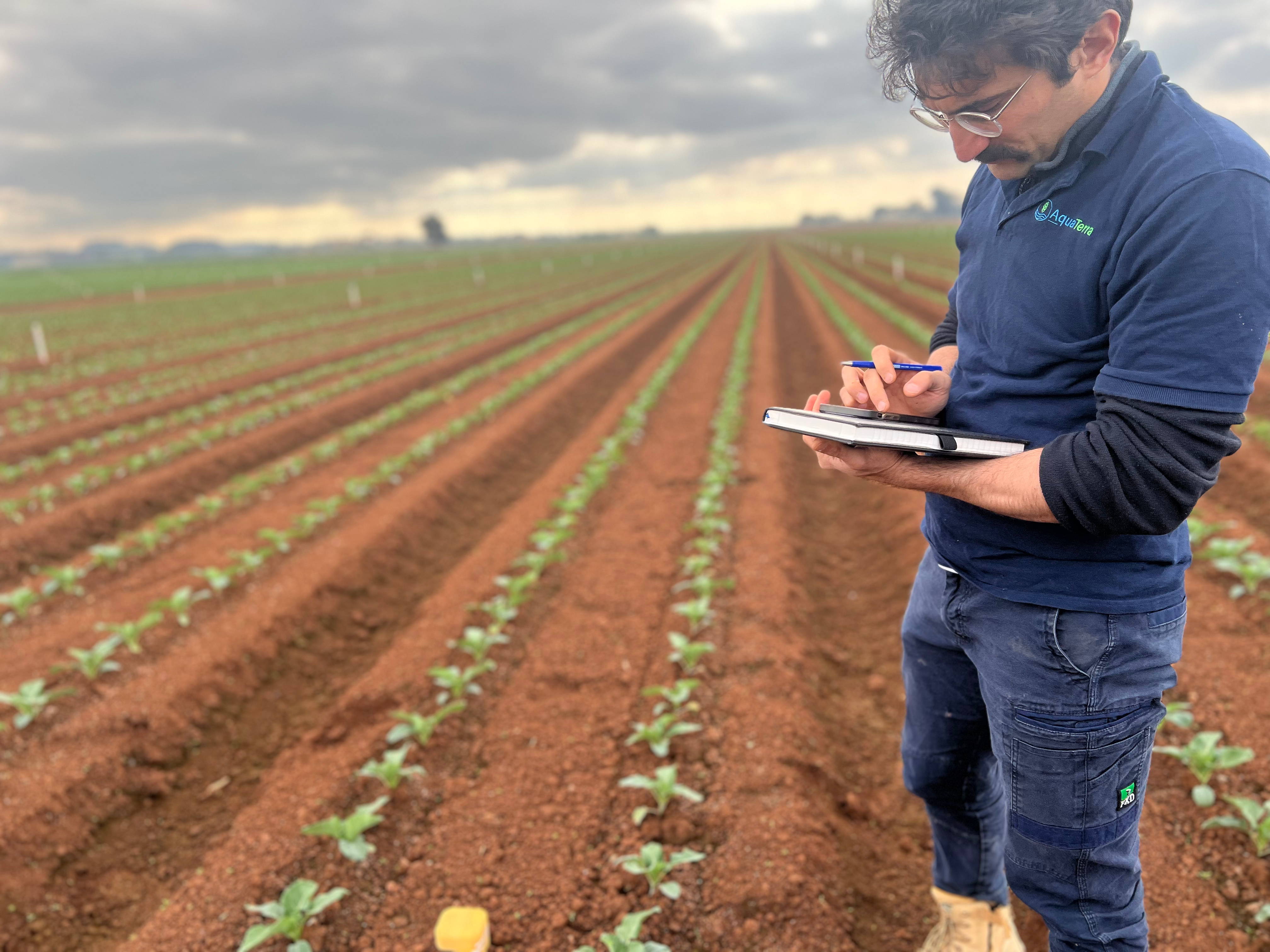
Professor Guillermo Narsilio's project aims to deliver a simple, affordable internet-connected soil moisture monitoring system for shallow and deep-rooted crops. The patented technology measures soil moisture and temperature up to two metres deep from a 15 cm installation. It aims to optimise sowing, reduce crop losses, save water, and promote sustainable agriculture practices.
- Project name: A new truly simple and affordable IoT soil moisture monitoring system: A world first shallow install sensor for deep rooted crops for smart farming
- Partner organisations: AquaTerra Solutions, Lenswood Cold Stores Co-operative Society, WiseConn Australia
AEA Innovate grants support mid-stage research commercialisation through competitive grants of up to $5 million for a maximum period of 24 months. They are available for researchers at Australian universities to collaborate with industry to advance projects that already have laboratory proof-of-concept.
Grant recipients are expected to be able to increase the technology and commercial readiness of their innovation to reach proof-of-scale. Learn more about AEA Innovate recipients.