NHMRC awards researchers $83m in Investigator Grants
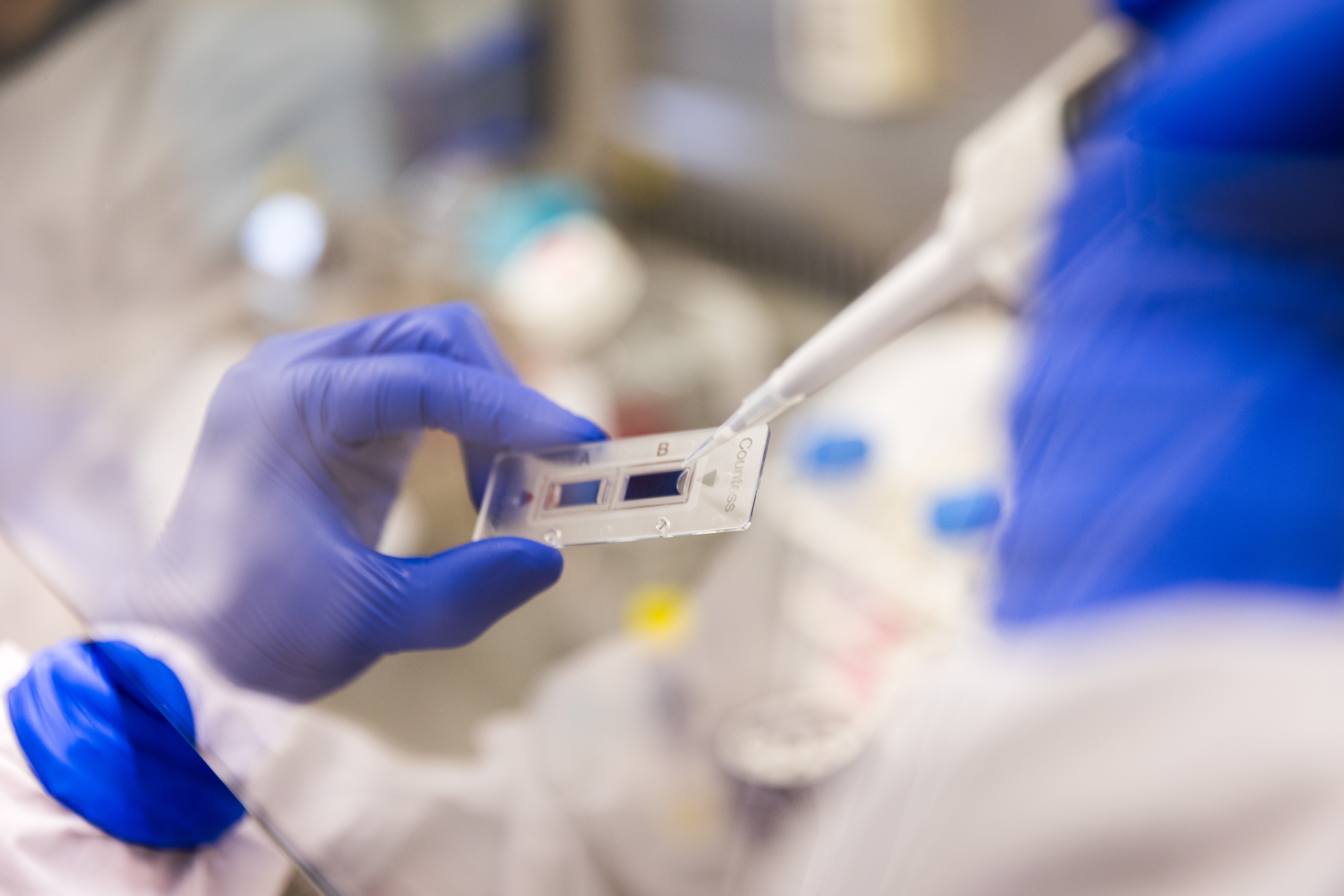
The University of Melbourne’s Faculty of Medicine, Dentistry and Health Sciences and Faculty of Engineering and Information Technology have received a total of $83.7m in funding across 45 research projects, to commence next year.
The annually awarded National Health and Medical Research Council (NHMRC) Investigator Grants fund researchers from all career stages to foster innovative and creative research. These grants also provide the flexibility for chief investigators to pursue important new research directions as they arise and to form collaborations as needed.
The following projects were successful:
- Dr Yasmine Ali Abdelhamid, from the Department of Critical Care: Targeting Muscle Loss to Improve Outcomes from Critical Illness.
- Dr Lilith Caballero Aguilar, from the Department of Biomedical Engineering: Advancing Cartilage Regeneration via Oxygen-driven Stem Cell Therapies.
- Associate Professor Paul Beavis, from The Sir Peter MacCallum Department of Oncology: Gene engineering approaches to enhance the efficacy of adoptive cellular therapy of cancer.
- Dr Alexis Ceecee Britten-Jones, from the Department of Optometry and Vision Sciences: Advancing ocular genomics to propel breakthrough treatments for blindness.
- Dr Nikki Burdett, from The Sir Peter MacCallum Department of Oncology: Targeting whole genome duplication as a therapeutic vulnerability in high grade serous ovarian cancer.
- Professor Ashley Bush, from the Florey Department of Neuroscience and Mental Health: Discovery and validation of drugs and diagnostics to propel a new era of dementia research.
- Dr Pratishtha Chatterjee, from the Florey Department of Neuroscience and Mental Health: A new molecular era for dementia: Biomarker discovery through to implementation.
- Associate Professor Amy Chung, from the Department of Microbiology and Immunology: Profiling protective antibody responses against infectious diseases.
- Associate Professor Alex Corbett, from the Department of Microbiology and Immunology: Exploiting the unique functions of MAIT cells to drive the rational design of new vaccines and immunotherapies.
- Associate Professor Vanessa Cropley, from the Centre for Youth Mental Health: Parsing sleep and circadian factors in risk for psychosis to inform pathways and phenotypes.
- Dr Mark Davies, from the Department of Microbiology and Immunology: Epidemiology, evolution and prevention of streptococcal pandemics.
- Professor Karen Day, from the Department of Microbiology and Immunology: Solving the surveillance challenges for malaria elimination in high burden countries.
- Professor Shyamali Dharmage, from the Melbourne School of Population and Global Health: A Life Course Approach to Early Detection and Interventions to Stop Pre-COPD.
- Dr Maria Di Biase, from the Department of Anatomy and Physiology: Patient-Centred Platforms for Preclinical Schizophrenia Research and Translation.
- Dr Maximilien Evrard, from the Department of Microbiology and Immunology: Enhancing tissue-resident memory T cell immunity through the microbiota.
- Dr Katie Fennell, from The Sir Peter MacCallum Department of Oncology: Unravelling cellular plasticity to find novel therapeutic targets for breast cancer.
- Associate Professor Stephanie Filbay, from the Department of Physiotherapy: Bridging the gap between evidence and practice to improve management of anterior cruciate ligament (ACL) injuries.
- Dr Carlos Gantner, from the Florey Department of Neuroscience and Mental Health: Decoding synucleinopathy by linking genomic variation to function.
- Professor Ben Harrison, from the Department of Psychiatry: Targeting Novel Treatment Mechanisms in Mood and Anxiety Disorders.
- Professor Michael Hofman, from The Sir Peter MacCallum Department of Oncology: Improving Prostate Cancer Outcomes by Integrating Novel Imaging and Targeted Therapy (theranostics) for Personalised Medicine.
- Professor Benjamin Howden, from the Department of Microbiology and Immunology: Genomics-driven innovations to tackle drug-resistant bacterial infections.
- Dr Danielle Ingle, from the Department of Microbiology and Immunology: Harnessing pathogen genomics to combat current and future threats of drug-resistant enteric bacteria.
- Dr Christine Keenan, from the Department of Biochemistry and Pharmacology: Unravelling epigenetic mechanisms to improve immunity.
- Dr Hui-Fern Koay, from the Department of Microbiology and Immunology: Harnessing MAIT cell biology and therapeutics to improve immunotherapy.
- Dr Marios Koutsakos, from the Department of Microbiology and Immunology: Establishing protective immunity against antigenically diverse viruses.
- Professor Sherene Loi, from The Sir Peter MacCallum Department of Oncology: Innovating in breast cancer immunology treatment and prevention.
- Dr Scott McAlister, from the Department of Critical Care: Reducing low value care to reduce healthcare's carbon emissions.
- Professor Grant McArthur, from The Sir Peter MacCallum Department of Oncology: Improving outcomes for patients with melanoma.
- Professor Matthew McKay, from the Department of Electrical and Electronic Engineering: Leveraging data-driven computational platforms to accelerate the effective prevention, treatment and surveillance of viral infectious diseases.
- Dr Hailey Meaklim, from the Melbourne School of Psychological Sciences: Better sleep for better mental health: Implementing sleep disorder education into mental healthcare training.
- Associate Professor Lachlan Miles, from the Department of Critical Care: Using sodium ascorbate to reduce neuroinflammation and delirium after cardiac surgery.
- Dr Niamh Moriarty, from the Florey Department of Neuroscience and Mental Health: Improving the Functional Integration of Human Pluripotent Stem Cell-Derived Neural Grafts.
- Dr Thi Hoang Oanh Nguyen, from the Department of Microbiology and Immunology: Unravelling immune responses to severe respiratory viral infection and vaccination in humans.
- Dr Karen Oliver (Broderick), from the Department of Medicine: Integrating monogenic and polygenic epilepsy risk factors to advance molecular diagnoses and to understand disease risk.
- Professor Kelly-Anne Phillips, from The Sir Peter MacCallum Department of Oncology: Precision Prevention, Targeted Treatment and Improved Survivorship to Decrease the Burden of Breast Cancer.
- Professor Danny Rischin, from The Sir Peter MacCallum Department of Oncology: Expanding the role of immunotherapy in cutaneous and mucosal head and neck squamous cell carcinomas.
- Professor Fiona Russell, from the Department of Paediatrics: Accelerating Global Vaccine Policy: Leveraging Regional Networks to Address Vaccine Research Gaps.
- Professor Julie Simpson, from the Melbourne School of Population and Global Health: Innovative Approaches to Optimising Existing and New Antimalarial Therapies.
- Dr Trevor Steward, from the Melbourne School of Psychological Sciences: Novel Neurobiological Treatment Mechanisms in Eating Disorders.
- Professor Tim Stinear, from the Department of Microbiology and Immunology: Elimination of Mycobacterium ulcerans infection (Buruli ulcer).
- Professor Jeanne Tie, from The Sir Peter MacCallum Department of Oncology: Advancing Precision Medicine for Colorectal Cancer through Liquid Biopsy.
- Associate Professor Linda Wakim, from the Department of Microbiology and Immunology: Generating a universal influenza vaccine.
- Dr Yi Wang, from the Department of Biomedical Engineering: A temporary “bloodstream”: human oxygenating hydrogels for the treatment of brain injuries.
- Dr Jesse Zanker, from the Department of Medicine: Strengths-based approaches: Responding to older Aboriginal and Torres Strait Islander adults’ needs for aged care services.
- Dr Pirooz Zareie, from the Department of Microbiology and Immunology: Understanding determinants of memory T cell fate to enhance cellular immunity.