Researchers secure $1.6m to scale-up direct air capture technology for reducing CO2 emissions
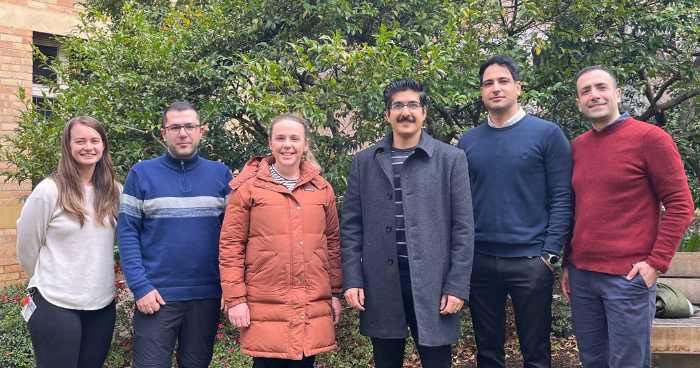
A team of researchers from the University of Melbourne and their collaborators have been awarded a $1.6 million grant from the Australian Government’s Carbon Capture Technologies Program to advance an innovative solution for reducing carbon dioxide (CO2) emissions.
Of the seven grant winners, this is the only university-led project. It aims to develop and scale up direct air capture (DAC) technology, which captures CO2 directly from the atmosphere and converts it into a carbonate-based rock.
Led by Professor Kathryn Mumford from the Department of Chemical Engineering in the Faculty of Engineering and Information Technology, the project involves collaboration with innovative engineering company INNACO and University of Melbourne spinoff company MK Collect.
The team, which also includes Professors Sarah Kentish (Chemical Engineering) and Ralf Haese (Faculty of Science), will focus on making the technology commercially viable as a sustainable solution for industries like construction.
“This funding is a game changer,” Professor Mumford said. “We can now upscale our activities and achieve substantial progress within a reasonable timeframe.”
MK Collect Co-founder Dr Masood Alivand highlighted the DAC system’s affordability and scalability.
“The DAC technology has many potential applications beyond creating construction materials such as concrete. For instance, it could be used in breweries and agriculture, offering sustainable alternatives for CO2 production,” Dr Alivand said.
INNACO Director Lars Herngren said the technology provides a valuable pathway for the accelerated commercialisation of a ground-breaking direct air capture system.
"The technology has significant potential to reduce the cost of direct air capture by reducing the energy penalty associated with solvent regeneration, creating value through the production of high value building material," Mr Herngren said.