Estate Stewardship
Why heritage matters
The University of Melbourne’s campuses reflect more than 170 years of teaching, research and community life, shaped by much longer histories of connection to Country. Our buildings, landscapes and collections form a rich cultural environment that contributes to identity, sense of place and connection to the broader city.
Guided by Strategy 2030: Resilience, we are building a university that can endure, adapt and evolve in a rapidly changing world. Our heritage estate plays a central role in this, providing strong physical and cultural foundations that support a vibrant, connected and distinctive campus experience.
As stewards of these places, we recognise our responsibility to protect their significance, while ensuring they continue to support contemporary education, research and community life.
The University’s history demonstrates that change, evolution and renewal have been pivotal in creating and sustaining institutional values.
Caring for Country and Indigenous knowledge
Embedding Indigenous approaches to place and stewardship
Our campuses are located on the unceded lands of Aboriginal and Torres Strait Islander peoples, whose knowledge systems and custodianship of Country span tens of thousands of years.
Through Murmuk Djerring (Working Together), we are strengthening how Indigenous knowledge, perspectives and partnerships are embedded across our campuses and estate.
We are working to:
- Embed Indigenous knowledge in campus planning and design
- Support truth-telling and recognition
- Partner with Traditional Owners, Elders and communities
- Create culturally safe and inclusive environments
How we manage heritage
Heritage is embedded within the University’s broader estate planning and governance approach, supporting sustainable, accountable operations and long-term institutional resilience.
More than 55 per cent of the University’s estate is heritage protected, including:
- Approx. 28 per cent on the Victorian Heritage Register
- Approx. 27 per cent subject to local heritage overlays
The University complies with legislation, including the Heritage Act 2017 and the Environment and Planning Act 1987, while embedding best-practice conservation into day-to-day operations, planning and investment decisions.
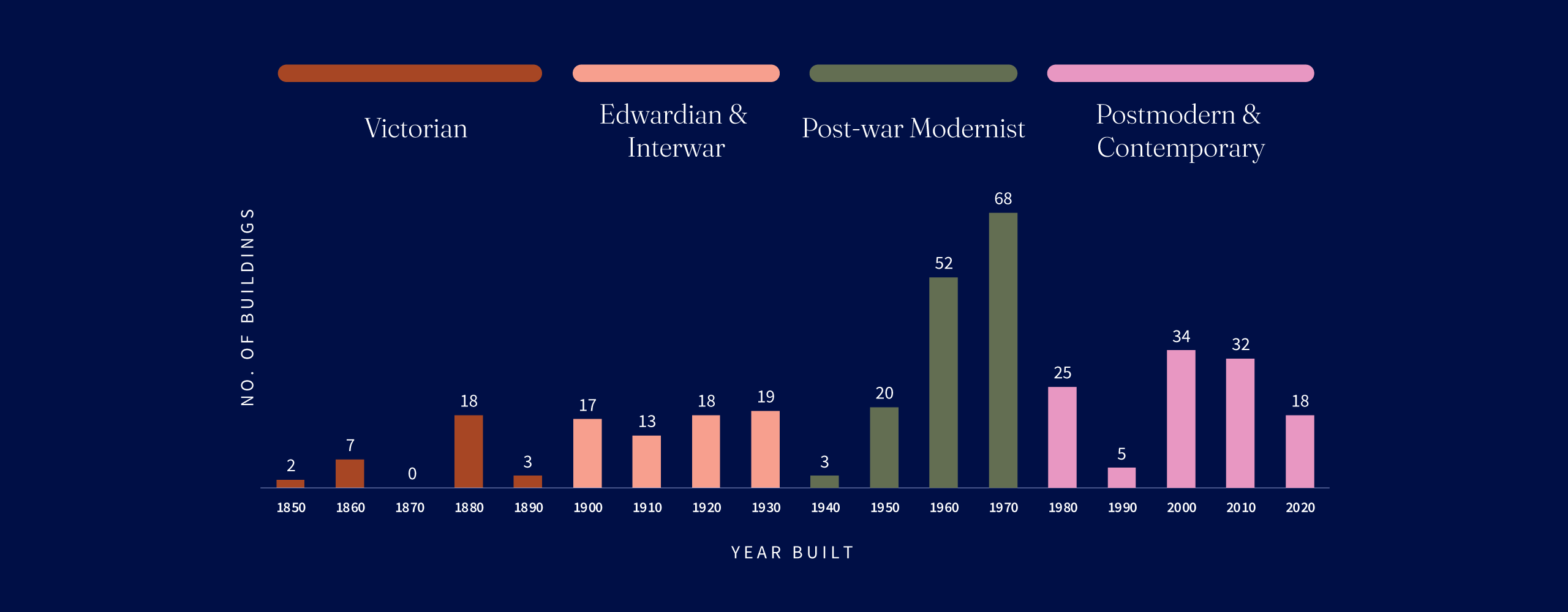
What we do in practice
We actively conserve and maintain our heritage places through coordinated, estate-wide activities that support both endurance and adaptability. This includes:
- Conservation and maintenance works
Ongoing care of building fabric, including façades, roofing, interiors, exteriors and significant landscapes. - Managing change and risk
Oversight of active projects, ensuring works are compliant and heritage values are protected. - Adaptive reuse and renewal
Upgrading heritage buildings to meet contemporary standards for teaching, research and accessibility. - Heritage advisory and approvals
Embedded in-house heritage expertise alongside external specialist advice from planning into project delivery. - Documentation and planning
Development of Conservation Management Plans and heritage studies to inform future decisions.
This work is critical to mitigating risk, strengthening governance and ensuring the University meets our obligations as stewards of a significant and complex heritage estate.
Informing future planning and development
Heritage is a key driver of how we plan and evolve our campuses, supporting a future-focused and resilient university. Current initiatives include:
- Thematic values study of Parkville historic campus
- Campus-wide heritage reviews supporting planning scheme amendments
- Conservation Management Plans for key heritage sites
- Cultural heritage studies examining historical development and future risks
These initiatives ensure that heritage informs, not constrains, future development, providing a strong framework for high-quality, place-based design and decision-making.
Long-term stewardship
Our approach to heritage reflects a long-term commitment to stewardship and resilience.
By embedding heritage within estate strategy, governance and operations, we ensure that the University’s historic environments remain:
- Protected and maintained
- Adaptable and fit-for-purpose
- Connected to community and place
In doing so, we strengthen the University’s ability to endure and evolve, supporting its role as a leading global institution and a key contributor to Melbourne’s cultural and civic life.
Balancing our past and our future
As the University evolves, we carefully balance the protection of heritage values with the need to deliver contemporary, high-performing environments that support our students, staff and research community.
Where possible, we prioritise the renewal and adaptive reuse of buildings, upgrading them to meet modern requirements while retaining their defining character. This supports improved functionality, accessibility and environmental performance, while preserving the values that make our campuses distinctive.
In some cases, new development is required to meet the scale and complexity of a globally connected university. In these instances, new buildings are thoughtfully designed to complement the campus’s heritage and thematic values, contributing to a cohesive and high-quality campus environment.
This approach enables us to:
- Deliver an outstanding student experience
- Support world-class research and collaboration
- Respond to evolving modes of teaching and learning
- Ensure financially sustainable and responsible investment
An example of this balance is the Student Precinct at our Parkville campus, which combines new buildings with major refurbishment of heritage structures to create a cohesive and highly activated campus environment. The project won top honours at the 2023 Australian Institute of Architects National Architecture Awards, securing the prestigious Walter Burley Griffin Award for Urban Design and a National Award for Heritage Architecture. Designed by a consortium led by Lyons, the project was also recognised for its sustainable adaptive reuse and co-design approach.
Engagement and partnerships
Consistent with Strategy 2030’s focus on connection and partnership, our approach to heritage is collaborative and inclusive. We engage extensively with:
- Staff, students and alumni
- Campus communities and local stakeholders
- Heritage experts and academic leaders
- Cultural and collections stakeholders
Engagement activities include workshops, surveys, walkarounds and expert reviews, ensuring diverse perspectives inform conservation and planning decisions. This approach strengthens trust, supports better outcomes and reinforces the University’s role as a connected and engaged institution.